

Who Decides What AI Should Never Do?
Who Decides What AI Should Never Do?
Five different power centers claim authority over AI’s red lines. None of them fully agree — and enforcement is patchier than the headlines suggest. Here’s the real map.
- No single body controls AI ethics. It’s a fractured system of governments, tech firms, UN agencies, academics, and civil society — each with real but limited power.
- The EU AI Act is the only binding law with hard bans (social scoring, biometric mass surveillance). Everything else is guidelines, pledges, or internal policy.
- The enforcement gap is the real story: 51% of AI systems show measurable harms (McKinsey 2025), yet fines remain rare and voluntary corporate commitments are inconsistently applied.
- The hardest question isn’t “what’s banned” — it’s who has enough judgment to use AI wisely when the rules don’t cover their situation.
The question nobody answers clearly
Ask who enforces speed limits and you get a clean answer. Ask who decides what AI should never do, and you get five different institutions talking past each other while the technology ships anyway.
That’s not cynicism — it’s the structural reality of 2025–2026. AI governance is genuinely multi-polar. Governments write laws on different timelines. International bodies publish recommendations that member states ignore. Corporations sign ethical pledges and quietly walk them back. Academics advise. Civil society litigates. And the systems keep deploying.
Understanding who actually holds which lever matters more than knowing what any single document says. Let’s map it.
The five power centers — and what each one actually controls
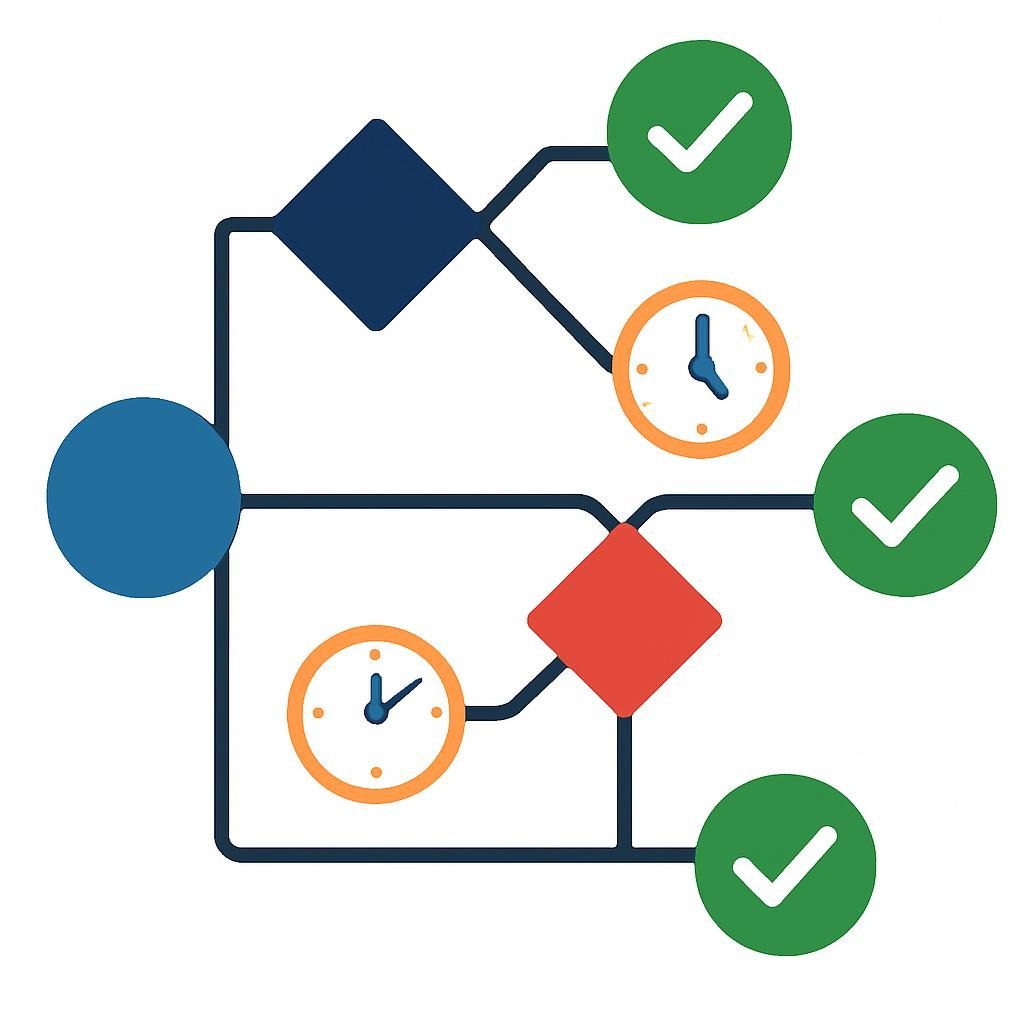
Fig. 1 — The AI governance power map. Influence ≠ enforcement. Most actors outside government lack binding authority.
Let’s be concrete about what each center actually does — and where it stops.
Governments: The only ones who can fine you
The EU AI Act, which began phased enforcement in February 2025, is the only framework with binding prohibitions backed by real penalties. Banned outright: social scoring by public authorities, real-time remote biometric surveillance in public spaces (with narrow exceptions), AI that exploits psychological vulnerabilities, and systems that infer protected characteristics from biometrics for discriminatory purposes. Established
The US remains fragmented. Executive Order 14110 established AI safety standards for federal agencies but left private deployment largely unregulated. Sector-specific rules (CFPB on credit scoring, FDA on medical AI) create patchwork coverage. State-level laws — Colorado, California, Illinois — are filling gaps the federal government hasn’t touched. It’s messy by design.
UNESCO and ITU: Norm-setters with no enforcement teeth
UNESCO’s 2021 Recommendation on the Ethics of AI — signed by all 194 member states — outlines principles including human oversight, transparency, sustainability, and equity. It’s influential in shaping national frameworks. What it can’t do is sanction anyone. Probable that several signatory governments will incorporate UNESCO principles into binding law by 2027; most haven’t yet.
“For anybody who’s using AI… do they have enough judgment to know when to listen to it and when not to?” — Rembrand Koning, Assistant Professor, Harvard Business School (2025 field study)
Corporations: Self-governance that’s only as strong as the incentive
Google’s original “AI Principles” prohibited weapons and surveillance technology. Then in early 2024 — quietly — that prohibition was removed from public documentation. OpenAI’s usage policies prohibit weapons of mass destruction and CSAM; they also explicitly restrict use for “undermining oversight of AI systems.” Anthropic’s Constitutional AI approach bakes principles into the model’s training rather than just its policies.
These aren’t meaningless. But they’re voluntary, revision-prone, and enforced by the same companies that profit from relaxing them. The incentive structure is the problem. Established
Academia: The best diagnosticians, rarely the decision-makers
Stanford’s AI Index, MIT’s research labs, and Harvard’s AI ethics faculty produce the data that shapes policy debates. HBS’s 2025 study on Kenyan entrepreneurs — covered below — is a good example: rigorous empirical work that reveals structural inequities the governance frameworks haven’t caught up to. Academics advise regulatory bodies, publish widely, and testify in legislatures. They don’t vote on regulations.
Civil society: The alarm system
The ACLU’s challenges to facial recognition in U.S. law enforcement, AlgorithmWatch’s audits of European hiring AI, Timnit Gebru’s Distributed AI Research Institute — these organizations do something the others don’t: they name specific systems, document specific harms, and create political pressure. Most AI regulatory breakthroughs follow a predictable sequence: civil society documents the harm → media amplifies it → legislators act. The Apple Card gender bias case followed exactly this pattern.
Hard bans vs. soft norms — the enforcement gap visualized
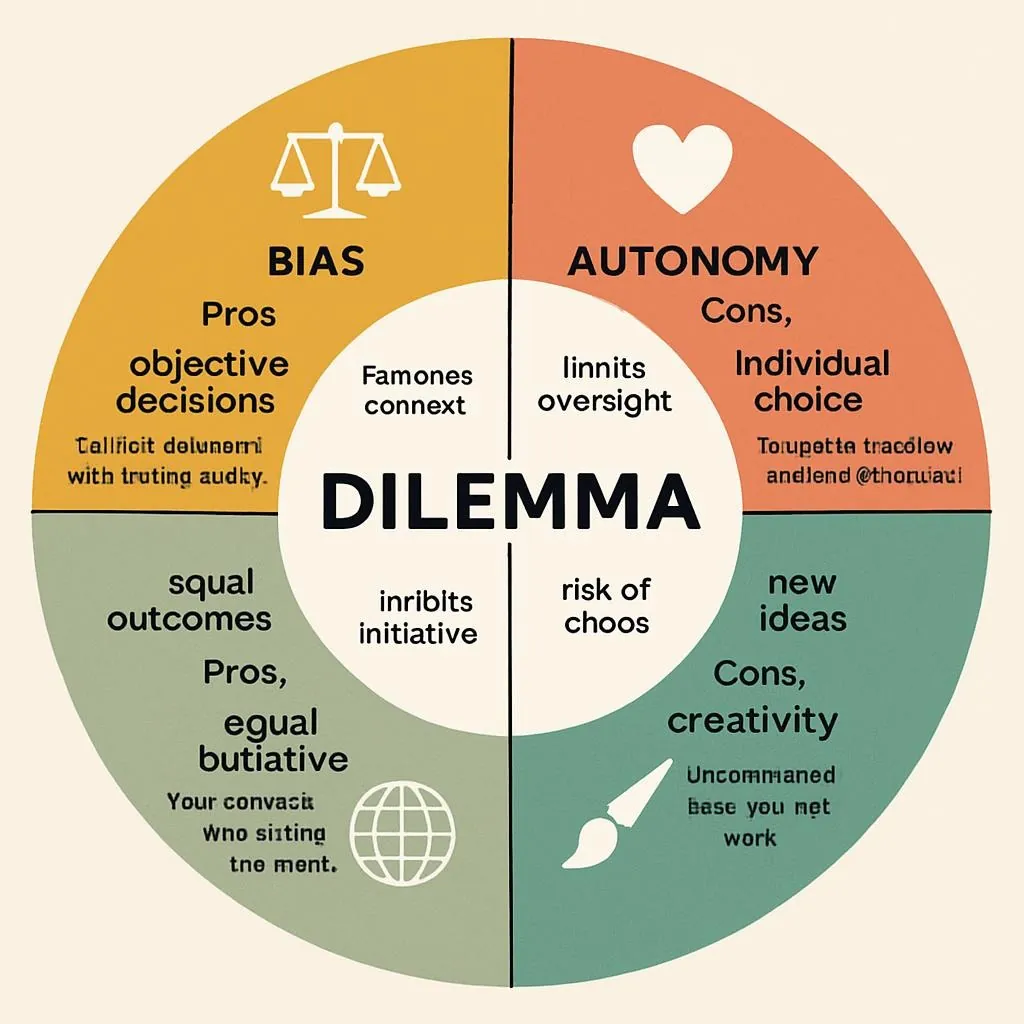
Fig. 2 — Enforcement strength across governance mechanisms. Most “AI ethics” lives in the bottom third of this chart.
This gap is why “51% of AI projects show ethical harms” (McKinsey 2025) and “21.3% growth in AI legislation” (Stanford AI Index) can both be true simultaneously. More laws don’t automatically mean more compliance — especially when the laws with teeth only cover the EU’s jurisdiction.
The judgment gap — the problem nobody’s legislating
Here’s the finding that stuck with me most from the 2025 research cycle. Harvard Business School ran a field experiment with Kenyan entrepreneurs using AI business assistants. The results split cleanly along one variable: prior judgment.
| User type | AI interaction style | Profit impact |
|---|---|---|
| High prior judgment | Selectively applied AI advice, challenged bad suggestions | +10–15% |
| Low prior judgment | Followed AI advice with limited critical filter | −8% |
The AI wasn’t broken. The same system, giving roughly the same advice, produced opposite outcomes based on whether the human using it had enough expertise to know when the advice was wrong.
Professor Rembrand Koning’s framing is precise: “Do they have enough judgment to know when to listen to it and when not to?” That question doesn’t appear anywhere in the EU AI Act, UNESCO’s recommendation, or any corporate ethics pledge I’ve read. They focus on what AI does. The HBS study shows that equally important — and harder to regulate — is what the human does with what AI says.
HBS’s Professor Colleen Ammerman raised a related concern: women in the sample used AI tools 10–40% less than men, compounding existing gaps. If the people with least access to AI are also least likely to develop the judgment to use it critically, the equity problem compounds itself quietly. Probable that current governance frameworks underweight this dynamic entirely.
Gray zones where nobody agrees
Hard bans are actually the easy part. Everyone agrees you shouldn’t use AI to run a social credit system in a liberal democracy. The fights that matter happen in the gray zones — applications where reasonable people disagree about whether prohibition is warranted.
| Application | Who wants it banned | Who wants it permitted | Current status |
|---|---|---|---|
| Lethal autonomous weapons (LAWS) | ICRC, 30+ nations, Campaign to Stop Killer Robots | US, UK, Russia, Israel (strategic advantage) | No binding treaty; informal norms only |
| Emotion recognition in hiring | EU (partially restricted), academics, labor unions | HR tech vendors, some employers | Restricted in EU, legal elsewhere |
| Predictive policing | ACLU, civil rights orgs, several US cities | Law enforcement agencies, some municipalities | No federal standard; patchwork bans |
| AI-generated content without disclosure | Journalism orgs, most democracy advocates | Marketing industry, content platforms (cost argument) | EU requires disclosure; US FTC guidance |
| AI in parole and sentencing | Legal scholars (Sandel, others), defense advocates | Court efficiency advocates, some prosecutors | Widespread use; minimal oversight standards |
Philosopher Michael Sandel’s argument here is worth taking seriously: some decisions require empathy and contextual moral judgment that AI fundamentally cannot provide. Parole decisions, medical triage, child welfare determinations — these aren’t computational problems. When you automate them, you don’t eliminate bias; you crystallize it, make it faster, and strip out the human capacity for mercy. Probable
“The problem with AI in consequential decisions isn’t that the algorithm is wrong. It’s that an algorithm being right 80% of the time means someone — a specific person — is wrongly imprisoned or wrongly denied parole.” — Paraphrase of arguments made by legal scholars including Sandel and others at Harvard Law’s AI and Justice symposia
⚠ What could be wrong with this analysis
- Regulatory velocity: The EU AI Act’s enforcement timeline is still developing. Some prohibited practices categories are being interpreted through guidance documents that weren’t finalized at time of writing. Check the EU AI Office’s official guidance for current status.
- The HBS Kenya study: A single field study in one country and sector. The “judgment gap” finding is plausible and consistent with automation bias research, but shouldn’t be generalized without replication. I find it compelling; treat it as a signal, not a law.
- Corporate ethics claims: I’m relying on public-facing documentation. Internal practices at AI companies aren’t transparent. What firms say their red lines are and how those lines function in product decisions may differ materially.
- The “51% harms” McKinsey figure: Survey-based, relies on self-reporting, and “ethical issues” is a broad category. The number sounds alarming because it is — but its methodology deserves scrutiny before you cite it in a boardroom.
What this actually means if you’re making decisions about AI
Three things matter more than reading another ethics framework document:
1. Know which jurisdiction’s rules apply to you
If you’re deploying AI that touches EU residents, you’re under the AI Act’s scope whether you’re headquartered in Brussels or Austin. The territorial reach of EU regulation is a fact many non-EU companies are still processing. The highest-risk categories (biometric systems, employment decisions, credit scoring, critical infrastructure) have the strictest requirements and shortest compliance windows.
2. Build judgment into your deployment — not just guardrails
The HBS finding has a practical implication most governance frameworks miss: it’s not enough to have ethical AI if the humans using it can’t critically evaluate its outputs. The question “does our team have enough judgment to know when not to follow this system?” should precede “have we implemented bias auditing?” Both matter, but you can audit your way into false confidence.
3. Assume voluntary pledges will drift toward convenience
Google’s pledge removal. Microsoft’s gradual shift on facial recognition policies. OpenAI’s evolving usage policy language. These aren’t scandals — they’re incentive structures behaving predictably. If your ethics program relies on a vendor’s voluntary commitments as a control, you have a gap. Document which ethical decisions are yours and which you’ve outsourced to a supplier whose interests aren’t perfectly aligned with yours.
FAQ
Is the EU AI Act the only binding AI law globally?
Can a company just ignore UNESCO’s AI ethics recommendation?
What does the EU AI Act actually prohibit — the complete list?
What’s the best tool for auditing AI systems for bias?
What’s the most underrated risk in AI governance right now?
Are autonomous weapons covered by any international AI ethics framework?
How should a small business approach AI ethics without a compliance team?
Sources
- EU AI Act (Regulation 2024/1689) — Official text, EUR-Lex
- Executive Order 14110 on Safe, Secure and Trustworthy AI — White House (2023)
- UNESCO Recommendation on the Ethics of Artificial Intelligence (2021)
- Stanford AI Index Report 2025 — Stanford HAI
- The State of AI — McKinsey Global Survey 2025
- Koning, R. et al. — AI Business Assistants Field Study, Kenya (HBS, 2025)
- ICRC Position on Autonomous Weapon Systems
- PwC Global AI Study — AI as a Growth Driver
- IBM Cost of a Data Breach Report 2024
- AlgorithmWatch — AI Accountability Research
AI and Human Taboos: Where Do We Draw the Line?
Why Machines Don’t Understand Morality—Unlocking AI Ethics for a Safer Future in 2026
Global Control: AI and the Hidden Hands 2026
AI Ethics and Control in Warfare: A Dangerous Game: Best Guide 2026
Categories