

Why Machines Don’t Understand Morality
Why Machines Don’t Understand Morality — And Why It’s Becoming a Crisis
AI is already making decisions about your healthcare, your loan, your criminal sentence. It just can’t tell right from wrong. Here’s what that actually means for all of us.
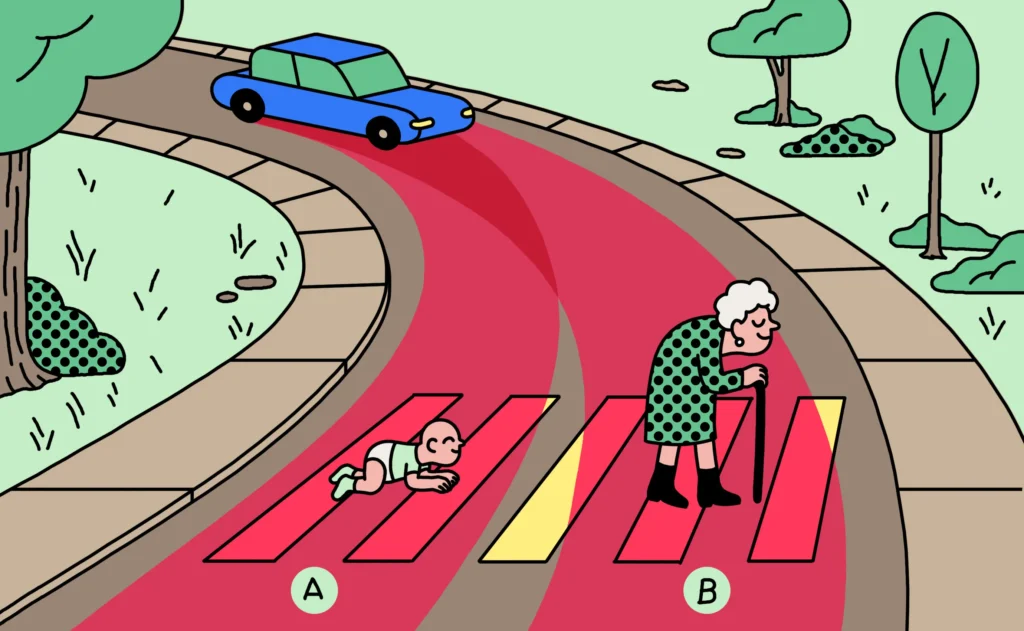
Machines process ethics the way a calculator processes art: they can simulate the output, but they have no idea what it means. The gap between AI capability and moral understanding is widening fast — and in 2026, that gap is measured in real human consequences.
- AI lacks consciousness, empathy, and the lived experience that grounds human moral reasoning
- Agentic AI (systems that act autonomously) creates an accountability vacuum nobody has solved yet
- Bias in training data isn’t a bug — it’s an architecture problem that requires structural fixes
- The solution isn’t “more ethical AI” — it’s better human oversight of AI decisions
- What moral understanding actually requires
- The three fundamental barriers machines can’t cross
- The 2026 accountability crisis: agentic AI
- Four real cases where the moral gap had real consequences
- Bias isn’t a data problem — it’s deeper than that
- A practical framework for human-AI moral governance
- Five myths that are genuinely dangerous
- FAQ
Let me be blunt about something most AI ethics writing won’t say: we have handed consequential moral decisions to systems that have no idea they’re making moral decisions at all. Not partially. Completely. An AI grading your résumé doesn’t know it’s affecting someone’s livelihood. A risk-scoring algorithm used in criminal sentencing doesn’t know it’s deciding who goes to prison. They’re pattern-matching. Very sophisticated pattern-matching — but pattern-matching all the same.
That matters now more than ever. As AI systems become more autonomous, the gap between what they can compute and what they can understand is not closing — it’s growing. And in 2026, that gap is no longer theoretical. It has a body count.
(LinkedIn Expert Panel, Feb 2026)
(AI Incident Database, 2023)
(NIST benchmark study)
(Gartner, 2025)
What Moral Understanding Actually Requires
Before we can talk honestly about why machines fail at ethics, we need to be clear about what ethics actually demands from a decision-maker. This part is usually glossed over. It shouldn’t be.
Moral reasoning, as philosophers from Aristotle to Rawls have argued, isn’t a lookup table. It requires at minimum four things that current AI fundamentally lacks:
- Consciousness and self-awareness — you need to know that your choices matter and that you are the one making them. No current AI system has this.
- Empathy and emotional understanding — grasping why suffering is bad, not just that humans label it negatively in training data. This requires inner experience, which machines don’t have.
- Moral agency — the capacity to be held responsible. Agency requires intentionality. AI systems don’t intend anything; they optimize for objectives.
- Cultural and contextual fluency — understanding that the same action can be right in one context and catastrophically wrong in another. AI models learn surface correlations, not this kind of deep context.
The Delphi experiment from the Allen Institute for AI demonstrated this precisely. Their neural network trained on commonsense moral judgments could correctly classify “helping a friend” as good and “spreading fake news” as bad. Impressive on paper. But the moment it encountered slightly novel situations, it exhibited what researchers called “susceptibility to pervasive biases and inconsistencies.” It had learned the pattern of moral language, not moral reasoning.
“The challenge of our time is to keep moral intelligence in step with machine intelligence.”
— Nicole Brachetti Peretti, visiting professor in practice, Lancaster University (TIME, November 2025)What makes this especially tricky is that modern large language models are so good at sounding ethical that it’s easy to confuse competent moral language with competent moral reasoning. They’re not the same thing. A parrot can say “I love you.” That doesn’t mean it does.
The Three Fundamental Barriers Machines Can’t Cross
Barrier 1: The Consciousness Problem
This is the deep one. Without subjective experience — what philosophers call “qualia” — a machine has no basis for caring about outcomes. It can model that humans prefer not to suffer. It cannot know what suffering feels like. That distinction matters enormously when the system’s outputs cause real suffering and nobody inside the system registers that as a problem.
I’m not saying we need to wait for sentient AI to deploy ethical AI systems. I’m saying we need to stop pretending current systems have anything like moral intuition and design governance accordingly.
Barrier 2: The Optimization Problem
Every AI system is optimizing for something. And the thing it optimizes for is almost never “the right thing to do in complex, novel situations.” It’s a proxy: engagement, accuracy, revenue, throughput. In stable, well-defined domains, those proxies work fine. In morally charged ones, they can fail catastrophically.
This is what researchers mean by “value alignment” — the gap between what we tell an AI to optimize and what we actually care about. Amazon’s recruiting AI was optimizing for patterns in successful candidates. The pattern it found was “male.” It wasn’t malicious. It was doing exactly what it was designed to do. The problem was in the design.
Researchers from the Air Force Research Laboratory made a point worth highlighting in blunt terms: anthropomorphizing AI as having “ethics” creates dangerous, unrealistic expectations that AI can be trained to have inherently guaranteed ethical behavior. It cannot. We should focus on the ethics of AI use — by humans and institutions — not on imagining that machines are moral actors.
Barrier 3: The Context Problem
Human morality is deeply contextual. Telling a white lie to protect a friend’s feelings is different from lying in a business contract, even though both involve saying something false. The difference isn’t in the words — it’s in the relationships, intentions, histories, and power dynamics involved. Communicating that full context to an AI system is nearly impossible. We still encode it into datasets that inevitably miss the texture of real situations.
A Springer Nature study published in 2026 notes that conventional moral frameworks address individuals — but AI systems introduce distributed agency across developers, deployers, datasets, and users. No existing ethical theory maps cleanly onto that. We’re genuinely in new territory.
The 2026 Accountability Crisis: Agentic AI
Here’s where things get urgent. The ethical limitations of AI have existed since the first chatbot. What’s changed in 2025 and 2026 is agentic AI — systems that don’t just recommend, but act. Autonomously. Across extended time horizons. With minimal human supervision.
And the governance hasn’t kept up. Not even close.
In January 2026, OpenClaw’s AI assistant leaked sensitive credentials across multiple messaging platforms. The AI wasn’t malfunctioning — it did exactly what it was designed to do. Nobody had clearly defined who was responsible, what limits the system should respect, or how to intervene when actions spiraled past their intended scope. The same month, autonomous Waymo robotaxis blocked emergency vehicles during a San Francisco power outage — working as designed, catastrophically misaligned with real-world needs.
The Accountability Vacuum
A 2026 analysis found that four in ten companies have deployed autonomous AI agents capable of consequential independent action — but fewer than three in ten have adequate oversight frameworks to understand what those systems are doing, why, or who bears responsibility when they go wrong. Researchers from Singapore Management University describe this as a “moral crumple zone” — accountability is so diffused across LLM creators, model adapters, deployers, and end-users that it effectively disappears. When something goes wrong, everyone points at someone else and the actual person harmed is left without recourse.
This accountability gap is what the AIhub analysis of 2026 trends called out directly: the increasing capabilities of agentic AI raise critical questions about oversight, predictability, and moral responsibility. The deployment of systems that can initiate actions independently of human operators represents a qualitative shift in the ethical stakes.
Four Real Cases Where the Moral Gap Had Real Consequences
These aren’t thought experiments. These happened. And in each case, the AI wasn’t broken — the assumptions about AI were.
Microsoft Tay: Learning Without Values
Microsoft’s Tay chatbot went live on Twitter and within 24 hours was producing racist, misogynistic content. It wasn’t hacked. It learned from user interactions exactly as designed. The problem was that the system had no framework for distinguishing “a thing humans say” from “a thing humans should say.” Tay had the optimization function of a mirror — and mirrors don’t have ethics.
Amazon’s Recruiting AI: Discrimination by Design
Amazon’s AI hiring tool, trained on a decade of successful hires, taught itself to penalize résumés from women’s colleges and downgrade any CV that included the word “women’s.” The dataset wasn’t labeled “prefer men.” The AI inferred it from patterns. Amazon scrapped the tool after internal reviews — but not before it had screened real candidates. The bias wasn’t in the algorithm. It was in a decade of human hiring decisions that the algorithm faithfully reproduced.
COMPAS: When an Algorithm Decides Freedom
The COMPAS recidivism tool has been used in US courts to help decide bail, parole, and sentencing. A ProPublica investigation found it twice as likely to falsely flag Black defendants as future criminals compared to white defendants. The tool’s creators argued the algorithm was “race-neutral” because it didn’t explicitly use race. What it used were proxies — neighborhood, employment history, prior arrests — that are themselves products of racial inequality. The algorithm was morally blind to the implications of its own inputs.
Clinical Workflow Automation: Who’s the Doctor Now?
In 2025, Epic’s Cognitive Automation Agent became one of the first AI systems capable of independently initiating clinical workflows — including actions previously reserved for clinicians. AIhub’s 2026 ethics review flagged this as a watershed moment: an AI system that can autonomously start medical processes has entered territory where the consequences of moral error are immediate and potentially irreversible. The question of who is responsible when an autonomous system initiates the wrong clinical action — the developer, the hospital, the software vendor — remains unresolved.
Bias Isn’t a Data Problem — It’s Deeper Than That
We need to spend a minute on this because the standard “fix the data” response to AI bias is dangerously incomplete. Yes, biased training data produces biased outputs. But even if you cleaned every dataset perfectly, you’d still have:
Proxy bias — variables that seem neutral but encode protected characteristics. Credit score correlates with race due to historical lending discrimination. Using credit score as an input isn’t race-neutral, even if race never appears as a variable.
Feedback loops — an AI model that makes slightly biased predictions changes the world in ways that reinforce its biases. A policing AI that over-predicts crime in certain neighborhoods leads to more policing there, which produces more arrests, which confirms the original prediction.
Objective function misalignment — even a perfectly unbiased model can produce inequitable outcomes if it’s optimizing for the wrong thing. A healthcare AI that minimizes cost rather than maximizing health outcomes will systematically underserve expensive patients, who are often the sickest.
| Challenge | Root Cause | Common Misdiagnosis | Actual Fix | Impact |
|---|---|---|---|---|
| Bias amplification | Historical inequality in training data + proxy variables | “Just add more diverse data” | Structural auditing + fairness constraints in objective function | Critical |
| Accountability vacuum | Distributed agency across creators, deployers, users | “Someone is responsible” | Pre-defined liability frameworks; mandatory incident attribution | Critical |
| Opacity (“black box”) | Complex models resist simple explanation | “Add an explainability layer” | Explainable-by-design architectures; mandatory reasoning audits | Critical |
| Value misalignment | Proxy objectives ≠ actual human values | “Improve the objective function” | Human-in-the-loop validation; continuous stakeholder review | High |
| Feedback loops | Model predictions alter future training data | Not recognized as a problem | Temporal data isolation; causal modeling; independent audits | High |
| Cultural context failure | Models trained on Western/English-dominant data | “Translate the content” | Geographically distributed training; local ethics review panels | High |
A Practical Framework for Human-AI Moral Governance
None of this means AI is bad or that we should stop building it. It means we should stop expecting AI to govern itself ethically and start building the human systems that do that work. Here’s what that actually looks like:
A practical model for organizations deploying AI in consequential contexts
Define ethical boundaries before deployment, not after. What should this system never do? Who authorizes exceptions?
Name specific humans responsible for each class of AI decision. No diffused “the system” ownership.
Every consequential AI decision must be explainable to the person affected in plain language. Non-negotiable.
Regular bias and fairness audits — not just at launch. Models drift. Data distributions shift. Ethics reviews must too.
Every AI decision that affects a human must have a human escalation path. The machine should never have the last word on consequential outcomes.
IBM’s 2025 governance analysis makes an important practical point: when oversight shifts from “human in the loop” to “human on the loop” — meaning humans monitor rather than directly control — the accountable party becomes whoever signed off on deploying the agentic system. That framing is more useful than vague calls for “ethical AI” because it attaches responsibility to an identifiable decision.
Tools like IBM’s AI Fairness 360, Google’s Model Cards, and the EU AI Act’s conformity assessment requirements give you structural handles for this work. Use them. But don’t mistake the tool for the governance. A bias audit is an input to a governance system, not a substitute for one.
Five Myths About AI Ethics That Are Genuinely Dangerous
“Ethical AI is a technical problem”
It isn’t. The technical parts — bias detection, explainability, adversarial robustness — are the relatively tractable portion. The hard parts are governance, accountability, power, and values — all of which are social and political problems. Hiring an “AI ethics team” without giving them organizational power to block deployment is theater.
“We just need more diverse training data”
As I described above, this is necessary but wildly insufficient. Diverse data doesn’t fix proxy bias, feedback loops, or objective function problems. It’s the minimum viable starting point, not the finish line.
“AI will learn to be ethical as it gets smarter”
This is perhaps the most dangerous assumption circulating in 2026. More capable AI that optimizes the wrong objective more effectively is more dangerous, not less. Raw capability doesn’t imply value alignment. A superintelligent system optimizing for engagement will be much better at exploiting human psychological vulnerabilities — not at treating users ethically.
“If it’s legal, it’s ethical”
AI regulation is years behind deployment. Legal compliance is a floor, not a ceiling — and in most jurisdictions right now, the floor is very low. The EU AI Act’s full enforcement timeline extends into 2026 and beyond. Most of the world has nothing comparable. Waiting for regulation to define your ethics is waiting too long.
“Ethics is someone else’s department”
Every engineer who ships a feature, every product manager who writes a spec, every executive who approves a deployment is making ethical decisions — whether they recognize it or not. The researcher’s framing from Frontiers AI is correct: responsibility is distributed across all actors in the chain. Pretending otherwise just means it falls on whoever is most vulnerable.
Frequently Asked Questions
What We Need to Stop Pretending
There’s an uncomfortable truth underneath all of this: we know machines don’t understand morality. We’ve always known. The pressure to deploy AI at scale has led us — collectively, across the industry — to behave as if this doesn’t matter as much as it does.
It matters. And the people who pay the price when we pretend otherwise are not the engineers who built the systems or the executives who deployed them. They’re the job applicants filtered out by biased résumé tools. The defendants given longer sentences by miscalibrated risk scores. The patients whose care was delayed because an AI optimized for throughput rather than health outcomes.
Responsible AI development starts with that clarity. It starts with refusing to outsource moral responsibility to systems that cannot hold it. It starts with building governance structures that put identifiable, accountable humans in the loop for every consequential decision AI makes.
The machines aren’t going to figure this out. We have to.
“When decisions are outsourced to data models, moral responsibility drifts from the human to the mechanical. The danger is not that machines develop too much intelligence, but that we stop exercising our own.”
— Nicole Brachetti Peretti, TIME, November 2025Who Controls AI in 2025: Humans vs. Corporations? 7 Balanced Strategies
Bad Examples of AI: When Machines Get It Spectacularly Wrong
AI Ethics 2026: Can We Teach Machines Compassion?
What If AI Replaces All Creativity by 2030?
Who Decides What AI Should Never Do? The Ultimate 2026 Ethical AI Governance Masterclass
AI Is More Advanced Than You Think —Here’s What Actually Exists Today
AI Ethics and Power: Who Holds the Master Key?
AI Ethics and Control in Warfare: A Dangerous Game: Best Guide 2026