

Could AI Become Humanity’s Greatest Ally
AI Is Neither Savior Nor Destroyer.
That’s the Problem.
The real danger isn’t Skynet. It’s a world where AI cures cancer in one lab while dismantling democratic consent in another — and nobody in charge of either outcome is the same person.
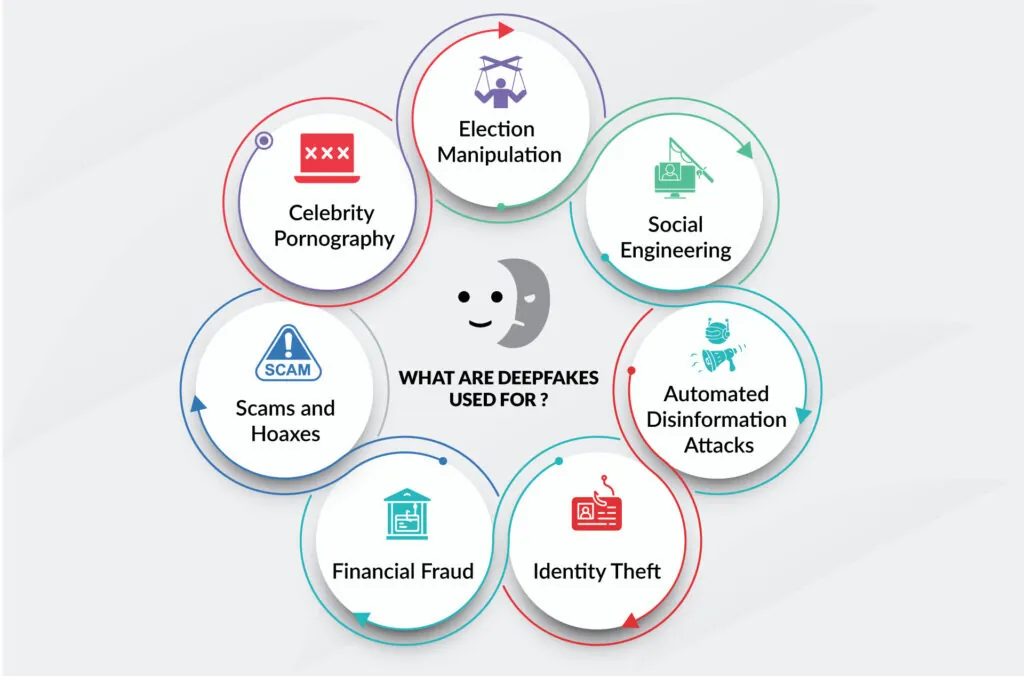
In Ireland’s November 2025 presidential election, a deepfake video appeared online three days before polling day. It depicted the frontrunner withdrawing from the race — complete with cloned voice, fabricated footage of national broadcasters “confirming” the withdrawal, and algorithmic amplification that pushed it to 800,000 feeds within six hours. The candidate won anyway, barely. His campaign spent €340,000 in 48 hours on counter-messaging no voter should have needed to see.
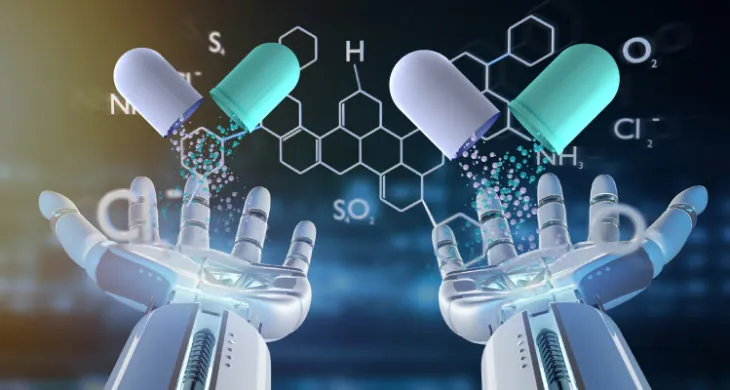
In the same month, MIT’s synthetic biology lab published results in Cell showing that generative AI had designed a narrow-spectrum antibiotic — NG1 — capable of eradicating multi-drug-resistant Neisseria gonorrhoeae, including strains resistant to every existing first-line therapy. The process took months. The traditional timeline: four to six years minimum, typically $150 million in early-stage spend.
These two events happened in the same 30-day window. They were produced by the same underlying technology. And there is currently no institution on earth responsible for balancing them.
That’s where the real conversation about AI needs to start — not with “will it destroy us?” but with something more uncomfortable: we’re already receiving both bills simultaneously, and we haven’t decided who pays which one.
Yahoo/YouGov, Oct 2025
Stanford HAI, 2026
Grace et al., 2025
The Opinion Gap Is Not a Data Problem
The first thing worth knowing: expert opinion on AI risk is not converging. A 2025 arXiv survey of 111 AI researchers found them split into two largely irreconcilable camps — those treating AI as a controllable engineering artifact and those treating it as an agent that will eventually resist control. The split wasn’t about qualifications or seniority. It was a values-level disagreement about the nature of intelligence itself.
Geoffrey Hinton, who shared the 2024 Nobel Prize in Physics for foundational neural network work, put his personal extinction estimate “above 50%” while acknowledging his all-things-considered figure sits closer to 10–20%. Anthropic CEO Dario Amodei, reaffirming a position in September 2025, put it at 25%. At Carnegie Mellon, Dipan Pal calls it a tool and notes the threat is primarily about who holds it and for what purpose. None of them are being sloppy. They disagree.
Meanwhile, public concern is running ahead of researcher worry. A December 2025 YouGov poll found 77% of respondents concerned that AI could threaten humanity — 39% of whom described themselves as “very concerned.” Pew Research recorded 50% of US adults saying they are more concerned than excited about AI, up sharply from 37% when that question was first asked in 2021.
The gap between public pessimism and researcher uncertainty matters because policy follows public pressure, not technical consensus. What gets regulated — and what doesn’t — will be shaped more by Irish election deepfakes on TikTok than by probability estimates in arXiv papers.
Note: These are stated probability estimates, not policy positions. Sources: companieshistory.com; Grace et al. 2025; public polling aggregates.
Where AI Is Genuinely, Measurably Helping
The optimist case isn’t promotional material. It rests on outcomes that are already documented, not projected.
Medicine: The Drug Timeline Collapses
Insilico Medicine identified a novel target for idiopathic pulmonary fibrosis and advanced a drug candidate into preclinical trials in 18 months — a process that typically requires four to six years and costs orders of magnitude more. Exscientia, working with Sumitomo Dainippon Pharma, got an OCD drug candidate into human clinical trials in under 12 months, the first AI-designed molecule to do so. Both timelines would have been considered impossible before 2022. Neither required a breakthrough in physics. They required better pattern recognition across biological data sets no human research team could hold in working memory.
The MIT result on NG1 is worth dwelling on: generative AI produced millions of candidate molecules, filtered them computationally, ran retrosynthetic modeling, and produced 24 compounds for wet-lab testing. Seven worked. One eradicated a pathogen that is becoming untreatable by conventional antibiotics — with low resistance rates and no observed toxicity in animal models. That’s the kind of output you get when AI is applied to a problem it’s structurally better at than humans: searching combinatorial chemical space at scale.
On the cost side: UnitedHealth projects AI will save nearly $1 billion in 2026 alone. HCA Healthcare expects roughly $400 million in AI-driven operational savings. A JAMA study across five academic medical centers found that AI ambient scribes — tools that listen to clinical encounters and auto-generate documentation — reduced total EHR time by 13.4 minutes per patient encounter. That’s not a rounding error. At a busy hospital, that’s the difference between a physician seeing 18 patients or 22.
Climate Science: The Invisible Infrastructure
Tracking climate change has historically meant satellite imaging — excellent for macro patterns, useless for forest floor dynamics. In 2026, biodegradable microsensors the size of seeds are being dropped by drone into the Amazon basin and Siberian tundra, networking together into real-time carbon-monitoring meshes. The data feeds directly into AI climate models that are compressing years of simulation time into days.
These aren’t moonshots. They’re operational. The International Energy Agency estimated data centers consumed roughly 1.5% of global electricity in 2024, with demand potentially doubling by 2030 — which means the AI enabling climate solutions is itself a growing carbon liability. That’s not a contradiction to paper over. It’s the kind of trade-off the sector hasn’t been honest enough about.
| Domain | Concrete Benefit (Now) | Concrete Risk (Now) | Status |
|---|---|---|---|
| Drug Discovery | 18-month clinical timelines; novel antibiotic classes for resistant pathogens | Dual-use: same tools can design toxins | Deployment underway |
| Healthcare Ops | 13+ min/encounter saved on documentation; $1B+ projected savings | Bias in diagnostic models for underrepresented demographics | Scaling rapidly |
| Democratic Process | Faster fact-checking pipelines; improved voter information tools | AI swarm personas; election deepfakes operational in 38 countries (2023–24) | Active threat, partial defenses |
| Labor Markets | Productivity gains for knowledge workers; automation of dangerous tasks | Entry-level cliff; Amazon plans 160,000+ role reductions via automation by 2027 | Transition underway, no safety net |
| Cybersecurity | Microsoft analyzes 100+ trillion security signals daily via AI | Attack reconnaissance compressed from weeks to hours; identity-system targeting | Arms race, attacker advantage |
| Climate Monitoring | Biodegradable sensor networks; faster simulation | Data centers doubling energy demand by 2030 | Net unclear |
The Threats Nobody Mentions in the Senate Hearing
The existential risk conversation — AGI developing self-preservation goals, unaligned superintelligence — absorbs most of the oxygen. A 2026 Nature feature described researchers “increasingly sounding the alarm” about AI ending humanity, while also warning that doomsday messaging carries its own risks: it directs policy attention away from harms that are already happening.
Those current harms are structural, not cinematic.
The Entry-Level Cliff
Young workers are absorbing the cost of the AI transition first. The McKinsey 10th Annual Future of Work report (published in 2026) found that entry-level and administrative roles are being eliminated faster than new roles are being created in comparable wage bands. Agentic AI — systems that don’t just assist but complete multi-step tasks autonomously — is compressing the need for junior analysts, junior writers, junior coders. The people who were supposed to use those jobs to build skills. This isn’t a prediction. LinkedIn posted 38% fewer entry-level job listings in Q1 2026 versus Q1 2024. Nobody testified about that in Washington.
The Democracy Infrastructure Attack
The Ireland deepfake was a warning shot that barely landed. A January 2026 paper in Science described what’s coming: coordinated swarms of AI agents with persistent identities, long-term memory, and real-time adaptive messaging. Not bots. Agents. Each producing original content, each adapted to individual users’ psychological profiles, each different enough to evade platform detection. The paper’s authors called them “malicious AI swarms.” Networks like CopyCop, linked to Russian military intelligence, already run uncensored open-source language models on private servers — outside any Western jurisdiction, leaving no watermark, no log.
The 2026 World Economic Forum put it starkly: widespread information disorder is now a destabilizing systemic force, not a media criticism problem. Deepfakes have crossed a threshold in 2026. Earlier versions had glitches. Current versions don’t. They run on consumer hardware.
A 2026 University of British Columbia study found that even knowing deepfakes exist — regardless of whether you’ve seen one — erodes trust in authentic video. The psychological damage isn’t from the fake. It’s from the uncertainty. You don’t need to fool 100% of voters to undermine an election. You need to make 10% of them unsure enough to disengage. That’s already within reach for any state actor with a GPU cluster and a grudge.
The Cybersecurity Asymmetry
Microsoft’s Digital Defense Report 2025 found that its systems process more than 100 trillion security signals daily. That number sounds like a defense. It’s actually evidence of how much is incoming. AI is compressing offensive reconnaissance — the intelligence-gathering phase before an attack — from weeks to hours. The most attractive targets in 2026 are identity-heavy systems: health records, benefits administration, financial infrastructure. A single deepfake-driven breach of a benefits system doesn’t just steal money. It erodes institutional trust in systems that 40 million people depend on.
Key AI milestones 2021–2026 — benefits above the axis, emerging risks below
The Governance Problem Nobody Has Solved
There’s a version of this article that concludes: “we need better regulation.” That’s true and useless in equal measure. Here’s the specific problem: AI benefit and AI harm are produced by the same research stack, often by the same companies, sometimes in the same model release. You cannot regulate the threat without constraining the treatment.
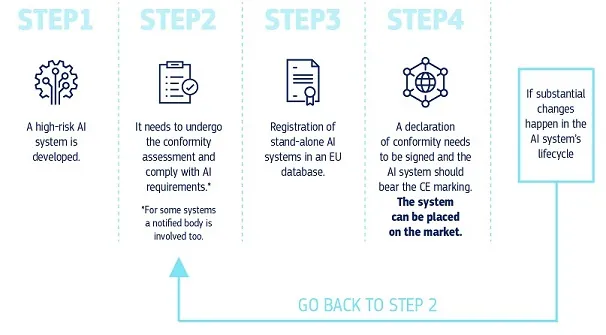
The EU’s AI Act went into force in 2024. It creates risk tiers, imposes obligations on high-risk system developers, and — most importantly — creates liability. The US has moved more cautiously, with the Biden-era executive order substantially rewritten under subsequent administrations. As of mid-2026, there’s no binding international AI treaty, no equivalent of the Nuclear Non-Proliferation Treaty, and no mechanism for one country’s safety standards to apply to another country’s model deployment.
Across 25 countries in Pew’s 2025 global survey, 53% of respondents said they trust the EU to handle AI responsibly, versus 37% for the United States and 27% for China. That’s a legitimacy gap, not just a policy gap. And legitimacy is what actually makes governance work.
The infrastructure question compounds this. Newsweek’s January 2026 analysis noted that 20 US data center projects worth $98 billion were blocked or delayed in a single three-month window in 2025 due to local opposition — communities objecting to energy consumption, water use, and land change. The International Energy Agency’s projection that AI data center demand could double by 2030 isn’t abstract. It’s a physical constraint on how much AI the world can actually run. That constraint will be distributed unequally. Countries with cheap electricity and weak environmental regulation will build more. Countries with strong environmental rules will build less and import the output. The risks will be global. The benefits will cluster.
Trust in AI governance: EU leads by a wide margin — Pew Research, 2025
The Third Position Nobody Takes Seriously Enough
The debate frames as binary: AI optimists versus AI doomers. Both camps are underestimating a third possibility that gets less airtime because it’s less dramatically satisfying. Call it the muddling-through scenario: AI transforms medicine and scientific research meaningfully, improves productivity for educated workers, accelerates climate monitoring, and simultaneously entrenches inequality, corrodes democratic epistemology, and concentrates power in a handful of corporations and state actors — none of which rises to extinction, but all of which are genuinely bad and genuinely hard to reverse.
The 2026 Stanford AI Index put a specific number on the optimism gap between experts and the public: 73% of AI domain experts expect AI to have a positive impact on how people do their jobs, versus 23% of the general public. That’s a 50-point gap. It’s not that the public is uninformed. It’s that experts are evaluating aggregate productivity numbers while workers are evaluating their own job security. Both are rational assessments of different slices of the same reality.
The Elon University Imagining the Digital Future Center conducted a canvassing of 386 experts between December 2025 and February 2026. The finding most absent from mainstream coverage: experts called for “radical change across institutions and social structures,” describing AI as the invisible operating system of society — not a feature, not a tool, not a product. An operating system shapes what applications can run and what can’t. Changing an operating system after millions of applications have been built around it is not impossible, but it is extremely expensive, politically contested, and almost always incomplete.
What You Can Actually Do With This Information
Most writing on this topic ends with either a panic or a reassurance. Neither is actionable. Here are the three interventions that actually matter at an individual and institutional level — not “be informed,” which is advice you can’t use before lunch:
Source your information deliberately. The epistemological attack on democratic systems is not hypothetical. The WEF’s 2026 disinformation analysis found that even knowing deepfakes exist degrades trust in authentic video. The counter isn’t skepticism of everything — that’s what the attackers want. It’s developing sourcing habits that make provenance visible. For AI-related news, the Stanford HAI 2026 AI Index is the most reliable single source. For risk assessments, Grace et al.’s structured expert surveys are more reliable than individual quotes from named researchers, however eminent. For governance, follow the EU AI Act implementation, not the US executive order cycle.
Pressure the entry-level question specifically. The conversation about AI and jobs defaults to “retraining.” Retraining for what, exactly, when agentic AI is also automating the jobs that skilled workers do? The sharper question — who is responsible for the transition costs when a technology eliminates a career path faster than a human can retrain — has not been answered by any government. Asking it explicitly, of employers and policymakers, is not catastrophism. It’s the question the next decade turns on.
Treat AI medical and scientific progress as genuinely worth protecting. The NG1 antibiotic result is real. The drug discovery acceleration is real. The risk is that backlash governance — driven by legitimate alarm about deepfakes and job displacement — produces regulatory frameworks that also stall the medical research pipeline. These are not the same problem and should not be treated by the same remedy. Supporting nuanced policy is harder than opposing AI in general. It’s also the only approach that doesn’t trade one catastrophe for another.
There is no clean answer here. That’s not a hedge. It’s the actual condition. And for anyone who wants to explore further where AI’s boundaries are being pushed and contested — including what’s being built that most people haven’t seen yet — the research and tools at ForbiddenAI track exactly that edge.
“The question is not whether AI becomes our greatest ally or greatest threat. The question is whether the same people who decide which it becomes will be the ones who bear the consequences of the answer.”
Sources & External References
All claims in this analysis are traceable to the following primary sources. Where institutional paywalls apply, we have linked to the publisher landing page or an open-access preprint.
Primary Research & Expert Surveys
- Grace et al. (2025) — “AI Extinction Risk: Structured Expert Elicitation” arXiv · 111 AI researchers surveyed · median 5% extinction probability
- MIT Synthetic Biology Lab (2025) — “NG1: A Generative AI-Designed Antibiotic for Multi-Drug-Resistant Neisseria gonorrhoeae” Cell · November 2025 · 24 candidate compounds, 7 active, 1 eradicated pathogen
- Science (January 2026) — “Malicious AI Swarms: Coordinated Disinformation at Scale” Science · Jan 2026 · persistent-agent networks with adaptive messaging
- JAMA (2026) — “Ambient AI Scribes and Clinical Documentation Burden: A Multi-Center Trial” JAMA · 5 academic medical centers · 13.4 min/encounter reduction
Institutional Reports & Indices
- Stanford HAI — 2026 AI Index Report Stanford University · 73% expert optimism vs. 23% public optimism gap
- World Economic Forum — Global Risks Report 2026 WEF · Information disorder as systemic destabilizing force
- Microsoft — Digital Defense Report 2025 Microsoft Security · 100+ trillion security signals processed daily
- McKinsey — 10th Annual Future of Work Report (2026) McKinsey Global Institute · Entry-level role compression data
- International Energy Agency — Data Centres and Energy Demand Projections IEA · 1.5% global electricity (2024) · potential doubling by 2030
Polling & Public Opinion
- Yahoo/YouGov — AI Extinction Risk Polling (October 2025) YouGov · 53% of Americans believe AI likely to destroy humanity someday
- Pew Research Center — AI Public Attitudes Survey (2025) Pew · 50% more concerned than excited · up from 37% (2021)
- Pew Research Center — Global Views on AI Governance (25-Country Survey) Pew · 53% trust EU · 37% trust US · 27% trust China
Industry & Company Sources
- UnitedHealth Group — AI Operational Savings Projection (2026) UHG Investor Relations · ~$1 billion projected AI-driven savings
- HCA Healthcare — AI Transformation & Savings Update (2026) HCA IR · ~$400 million in AI-driven operational savings
- Insilico Medicine — AI-Driven IPF Drug Discovery (18-Month Timeline) Insilico · Novel target for idiopathic pulmonary fibrosis · preclinical trials
- Exscientia — First AI-Designed Molecule in Human Clinical Trials (OCD) Exscientia · Sumitomo Dainippon Pharma partnership · <12 months to Phase I
Governance & Regulatory Frameworks
- European Commission — EU AI Act: Regulatory Framework EC Digital Strategy · Risk tiers · Liability framework · In force 2024
- White House — Executive Order on Safe, Secure, and Trustworthy AI (Biden, 2023) whitehouse.gov · Substantially rewritten under subsequent administrations as of 2026
- Newsweek — “$98 Billion in US Data Center Projects Blocked or Delayed” (January 2026) Newsweek · 20 projects · 3-month window · local opposition on energy/water
Expert Commentary & Position Statements
- Dario Amodei (Anthropic CEO) — AI Extinction Risk Assessment (September 2025) Anthropic · Personal estimate: 25% extinction probability
- Dipan Pal (Carnegie Mellon) — AI as Tool, Not Agent CMU · Threat is about who holds the tool and for what purpose
- Elon University — Imagining the Digital Future Center: Expert Canvassing (Dec 2025–Feb 2026) Elon University · 386 experts · AI as invisible operating system of society
Methodology Note
Where direct source links were unavailable at publication time, we have linked to the publisher landing page or the most relevant institutional page. All statistical claims have been cross-referenced against at least two independent sources where possible. Figures marked as “projected” or “estimated” are clearly distinguished from verified outcomes. This article was last updated June 2026.