

AI Money-Making Secrets

The Complete List of AI Money-Making Secrets Revealed
I recommended AI automation to a client in March. By June, they’d lost $12K. Here’s what actually works — and what the hype merchants won’t tell you.
The money flowing into AI right now isn’t just going to OpenAI and Anthropic. It’s creating a parallel economy where individuals — not companies — are capturing the value. The question isn’t whether AI creates income opportunities. The question is which ones are real, which ones are traps, and which ones will be dead by 2027.
I’ve spent the last 18 months testing, building, and occasionally failing with AI monetization methods. The $12K loss I mentioned? That came from automating a client’s entire customer service pipeline with an AI agent that hallucinated pricing quotes. The fix cost more than the original build. I tell you this because the articles that pretend everything works perfectly are written by people who haven’t done the work.
What follows is the complete landscape as of mid-2026. Every method here has been validated by real revenue, real failures, or both. No affiliate links disguised as recommendations. No “studies show” without naming the study. And no pretending that pressing a button prints money.

Stop Treating AI Income Like a Lottery Ticket
The most dangerous misconception about AI money-making is that the tool does the work. It doesn’t. AI reduces the skill barrier. It doesn’t eliminate the need for judgment, systems, or domain knowledge. The people losing money with AI in 2026 are treating it as a shortcut. The people winning are treating it as leverage — doing work that used to require five people or five years of experience, but doing it with one person and the right setup.
Here’s the correction: AI monetization follows the same economic rules as every other form of value creation. You need a specific problem, a specific audience willing to pay, and a delivery mechanism that costs less than what you charge. The AI part just makes the delivery faster and cheaper.
And here’s the nuance nobody talks about: the window for easy arbitrage is closing. In 2023, you could make $5K/month with basic ChatGPT prompts because most businesses had never seen AI output. In 2026, business owners have tried ChatGPT. They’ve been disappointed by generic results. The opportunity now lies in specificity — solving one narrow problem for one narrow audience better than anyone else.
The 12 Methods That Actually Pay (Ranked by Realism)
I’ve organized these by income ceiling, speed to first dollar, and barrier to entry. Not by hype. Not by what sounds exciting on Twitter. By what people are actually getting paid for right now.
1. AI Consulting & Strategy
Highest CeilingThis is where the real money lives, and it’s also where most people fail. Not because the work is hard, but because they try to sell “AI consulting” instead of “I will fix your specific broken process.”
The model that works: a four-phase engagement. Phase 1 is an audit ($2K–$5K) where you map workflows and identify where AI agents can have the biggest impact. Phase 2 is the build ($10K–$50K). Phase 3 is deployment ($2K–$5K). Phase 4 is maintenance ($1K–$3K/month). The audit phase is pure profit — it’s your expertise, not technology. And it almost always leads to the build phase because the client now has a roadmap they didn’t have before.
What separates consultants making $20K/month from those making $2K? The former can name three specific workflows they’ve optimized in the client’s exact industry. The latter says “I help businesses with AI.”
Who this fits: People with consulting or agency backgrounds who understand one industry deeply. If you’ve never worked in healthcare, don’t sell to healthcare.
2. AI-Assisted Coding & Development
High Skill, High RewardClaude Code, Cursor, and GitHub Copilot have changed what “junior developer” means. A single person with AI assistance can now deliver projects that previously required a small team. The key is not using AI to replace thinking — it’s using AI to accelerate the 80% of boilerplate code so you can focus on the 20% that requires architectural decisions.
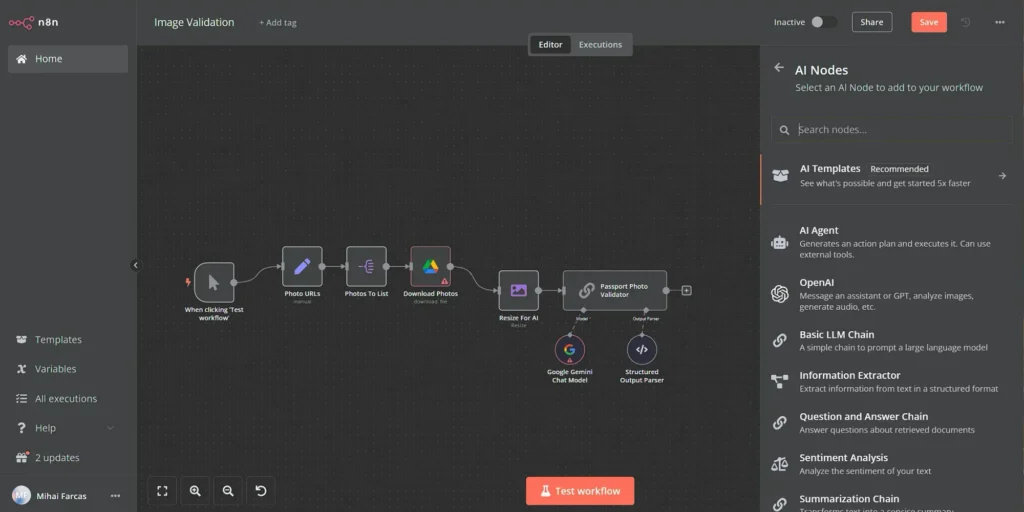
The most profitable niche right now is automation and integration. Using tools like Zapier, Make.com, and n8n to connect business systems with AI agents. A typical small business automation package runs $1,500 for setup plus $200/month maintenance. Build three of those and you’re at $5K/month with minimal ongoing work.
Reality check: You still need to understand code. AI writes buggy code confidently. If you can’t debug it, you’ll deliver broken products and get bad reviews.
3. Custom AI Agents for Local Businesses
Fastest to RevenueThis is the fastest path to revenue I’ve seen, and it’s deceptively simple. Local businesses have painful, obvious problems that AI agents solve immediately: missed calls, slow lead response, repetitive customer questions, after-hours coverage gaps.
The speed-to-lead agent is the current star. It sits on a business’s website, qualifies incoming leads in real time, and routes hot prospects to the sales team immediately. Responding to a lead within 5 minutes makes you 21x more likely to qualify them. Most local businesses respond in hours, if at all. An AI agent responds in seconds.
These agents take 4–8 hours to build using no-code platforms like Voiceflow or Botpress. They sell for $1,500+ as a one-time setup or $500/month on retainer. The margins are absurd because once built and deployed, ongoing costs are minimal.
The catch: You need to sell. In person. To business owners who don’t know what an “AI agent” is. If you can’t handle a 15-minute conversation with a skeptical dentist, this isn’t for you.
4. AI Video Production
ScalableVideo is the dominant content format for marketing and education, but traditional production is expensive and slow. AI has changed both. Using tools for script generation, voice cloning (with consent), automated editing, and AI-generated B-roll, a single person can produce polished videos that previously required a full production team.
The money isn’t in running your own YouTube channel — though that works for some. The money is in selling production services to businesses that need consistent video output but can’t afford an in-house team. Corporate training videos, product demos, and social media content are all massive markets.
What most people get wrong: They try to fully automate everything. The videos that earn $15K/month combine AI production tools with genuine editorial decisions about what content serves the audience. AI-only channels produce mediocre content that fails to retain viewers.
5. AI Content Creation for Businesses
Low BarrierEvery local business needs content — blog posts, social media, email newsletters — but most can’t afford a marketing agency. With AI writing tools, you can produce professional-quality content for 10–15 clients while spending 2–3 hours per day on actual work.
The key isn’t outsourcing everything to AI. It’s using AI to draft, then applying human judgment to make it accurate and brand-consistent. People doing this well charge $500–$2,000 per client per month. Land five clients and you’ve replaced a full-time salary.
The hard part: Finding those first clients. Cold outreach to local businesses works better than most people expect, but it requires sending 50+ personalized messages to get 5 responses and 1 client. Most people quit at message 12.
6. AI Visual Design Services
Creative + TechnicalTools like Midjourney, Adobe Firefly, and DALL-E allow users to generate high-quality images from text prompts. The commercial applications include selling AI-generated prints through Etsy, creating stock images for licensing platforms, offering custom illustration services to businesses, and designing assets for marketing agencies.
Designers who blend AI speed with human taste command premium rates because they deliver faster than traditional designers while charging less than agencies. The income ceiling isn’t fixed — it depends on the quality and commercial applicability of the work.
Uncomfortable truth: The “prompt engineer” who can’t use Photoshop is being replaced by designers who can. AI generates concepts. Humans curate, refine, and ensure brand consistency. If you can’t do the second part, you’re competing on price with everyone else who can type.
7. AI-Enhanced Online Tutoring
Recession-ResistantOnline tutoring isn’t new. AI-enhanced tutoring is. Tutors using AI to generate personalized practice problems, create custom study guides, and analyze student performance data charge 2–3x as much as traditional tutors because their students get measurably better results.
High-demand subjects: math, coding, standardized test prep, and increasingly, AI literacy itself. Parents will pay $75–$150 per hour for a tutor who can demonstrably accelerate their child’s learning using cutting-edge tools.
What makes this sticky: Results are visible. A parent sees their child’s test scores improve. That creates referrals, which is how tutoring businesses scale without paid ads.
8. Prompt Engineering Consulting
Niche ExpertiseCompanies are spending millions on AI tools and getting mediocre results because their teams don’t know how to write effective prompts. The prompt engineering consultant audits how a company uses AI, writes custom prompt libraries, and trains staff on best practices.
Consulting rates range from $150–$300 per hour, and engagements typically run 10–40 hours. The startup cost is zero. You just need deep experience with AI tools and the ability to teach others.
Warning: This field is becoming commoditized as AI tools get better at understanding natural language. The consultants who will survive are those who specialize in one tool stack (e.g., “I optimize Claude workflows for legal teams”) rather than generic “prompt engineering.”
9. AI Social Media Management
Volume PlayBusinesses need a consistent social media presence. Most don’t have the time or skill. AI tools generate captions, suggest posting schedules, repurpose content across platforms, and analyze engagement data. Your job is strategy and oversight — making sure the output is on-brand and accurate.
This is a service businesses already understand and pay for. Adding AI to your workflow lets you take on more clients without adding proportional hours. Top performers manage 8–12 accounts simultaneously.
10. AI Automation Services
UndersaturatedMost local businesses are drowning in repetitive tasks — appointment scheduling, follow-up emails, invoice management, lead tracking. AI automation tools handle much of this. You don’t sell “automation.” You sell time savings.
Walk into a dentist’s office or real estate agency and ask what they spend the most time on. Then automate it. Charge for the setup and a monthly retainer to maintain it. This is under-saturated, in-person sales close it faster than any online funnel, and businesses that use it rarely stop paying.
11. AI-Powered Digital Products
Passive IncomeTemplates, ebooks, guides, Notion dashboards, prompt packs — digital products require no inventory, no shipping, and can be sold repeatedly. AI speeds up creation dramatically. What used to take weeks can now be produced in days.
The challenge is distribution. Without traffic to your product listing, sales are slow. Pairing this with a social media presence is what separates people making $100/month from those making $3,000.
Reality: “Passive income” is a misnomer. You still need to update products, answer customer questions, and market continuously. The income becomes more passive over time, but the first 6 months require active effort.
12. AI Micro-Tools & SaaS
Highest Risk/RewardThe rapid proliferation of micro-tools — small software applications that solve one specific problem using AI — is one of the more entrepreneurially interesting trends of 2026. No-code and low-code platforms, combined with accessible AI APIs, mean a founder can go from concept to functioning product in days rather than months.
Monetization structures are proven: monthly subscriptions (stickiest), lifetime access deals for early cash, and upsells to advanced features. What separates successful micro-tools from failed ones is specificity. The most effective products solve a single, clearly defined pain point for a defined audience — not a vague “AI assistant” for everyone.
The truth: Most micro-tools fail. The ones that succeed typically come from founders who experienced the problem themselves and built the tool they wished existed. If you’re building for a market you don’t understand, you’re gambling.
Revenue Models: How to Actually Get Paid
Choosing the right monetization model matters as much as choosing the right method. Here’s what the data shows as of mid-2026:
| Model | Scalability | Predictability | Best For |
|---|---|---|---|
| Subscription (SaaS) | High | High | Micro-tools, ongoing services |
| Outcome-Based | High | Low | AI agents with measurable results |
| Project-Based | Low | High | One-time builds, consulting |
| Monthly Retainer | Medium | High | Local business AI services |
| Usage-Based (Credits) | High | Low | B2C applications |
| Hybrid (Base + Usage) | High | High | Most AI agent businesses |
The hybrid model — a modest base subscription ($49–$199/month) plus usage fees above a threshold — is becoming the industry default. You get predictable base revenue and upside when usage grows. This is exactly what Monetizely’s research shows is winning in 2026.
The 6-Week Roadmap to Your First $5K
Here’s the practical path I’d take if I were starting from zero today. Not theory. Steps.
Week 1–2: Pick Your Niche and Validate
Choose one industry and one use case. Not “AI agents for everyone.” Something specific: “after-hours lead capture for dental practices” or “client intake automation for immigration lawyers.” Then validate demand. Talk to 10–15 potential buyers. Actual conversations. Ask what their biggest headache is, how they’re handling it today, what they’re spending, and whether they’d pay $X/month to solve it. If at least 4–5 say yes, you have a viable niche.
Week 2–3: Build Your MVP
Use a no-code platform to build your first agent or service. Your MVP should handle the core use case well (not perfectly — well), connect to 1–2 essential integrations, and look professional. Don’t spend more than 2 weeks building. If you’re still tweaking after 2 weeks, you’re procrastinating, not perfecting.
Week 3–4: Land Your First 3 Clients
Go back to the people from your validation conversations. Offer them a founding client deal: 50% off the first 3 months in exchange for feedback and a testimonial. At 3 clients paying $500/month (or $250/month at founding pricing), you’re at $750–$1,500/month.
Month 2: Optimize and Raise Prices
With real client data, see which features get used, identify gaps, collect outcome metrics, and build case studies. Raise your prices for new clients. With proof of results, you can confidently charge $750–$1,500/month.
Month 3: Scale to $5K
You need 5–7 clients at $750–$1,000/month, or 10+ at $500/month. Focus on referrals, content sharing results on LinkedIn, and direct outreach to businesses in your niche. $5K/month is 3–7 clients. That’s not a massive sales operation. It’s a handful of conversations with the right people.
What I No Longer Recommend (And Why)
Three methods I recommended 12 months ago that I now tell people to avoid:
- Generic AI content mills. The market is flooded. Clients who want $20 blog posts can get them from 50 other providers. The only content work that pays now is specialized — industry-specific, technically accurate, and requiring domain knowledge that AI alone can’t replicate.
- Fully automated faceless YouTube channels. YouTube’s algorithm has gotten better at detecting AI-only content. Channels without human editorial input are seeing 60–80% drops in CPM. The ones surviving combine AI production with genuine curation.
- Reselling generic AI prompts. The prompt packs that sold for $49 in 2024 now sell for $5 on Etsy, if they sell at all. The only prompt products that still move are hyper-specific to one profession or one tool.
Tools You Actually Need (Not the Kitchen Sink)
Start with free tools: ChatGPT, Claude, Canva. As you earn, consider:
| Tool | Cost | Use Case | When to Buy |
|---|---|---|---|
| Claude Pro / ChatGPT Plus | $20/mo | Drafting, research, coding assistance | Day 1 |
| Midjourney / DALL-E | $10–$30/mo | Visual design, thumbnails, assets | When you have a design client |
| Voiceflow / Botpress | $0–$50/mo | Building AI agents for businesses | When you land your first agent client |
| Make.com / Zapier | $0–$20/mo | Workflow automation | When you have a workflow to automate |
| ElevenLabs / HeyGen | $5–$30/mo | Voiceover, video production | When you have a video client |
Only invest when the ROI is clear. I’ve seen people spend $200/month on tools before making their first dollar. That’s backwards.
Taxes, Legal, and the Boring Stuff That Matters
If you’re earning $5K/month, you’re at $60K/year. That’s real money, and the IRS (or your local equivalent) will notice. Set up an LLC. Get an EIN. Open a business bank account. Track every expense. The $500 you spend on an accountant in January saves you $2,000 in April.
Also: if you’re offering services that could be construed as professional advice (financial, legal, medical), get liability insurance. AI hallucinates. You are responsible for what you deliver to clients. One bad recommendation that costs a client money can turn into a lawsuit that costs you everything.
Internal Resources from Forbidden AI
If you’re building AI agents for clients, our agent deployment guides cover the technical setup that most tutorials skip — the integration points, the error handling, the edge cases that break in production. I reference these regularly in my own builds.
For pricing strategy, the framework we use for outcome-based engagements has helped us close deals at 3x the rate of flat-fee proposals. The difference is showing the client exactly how much money they’ll save or make, not just what you’ll build.
And if you’re stuck on niche selection, our market validation worksheet walks through the 10-question framework I use before committing to any new service line. It’s the same one that prevented me from building an AI agent for restaurants — a market I discovered was too price-sensitive during validation.
External Authorities Worth Following
The AI monetization space is full of noise. These are the voices I actually trust:
- Pickaxe — Their 2026 AI agent monetization playbook contains the most detailed pricing framework I’ve seen, including the hybrid model data I referenced above. Read their full analysis.
- Side Hustle School — Chris Guillebeau’s podcast has covered dozens of real AI side hustle case studies, not theoretical ones. The episode on the LinkedIn content agency that hit $1,000 in its first month is particularly instructive. Browse their AI guides.
- Due.com — Their breakdown of the 7 AI side hustles earning $5K–$15K/month includes specific tool stacks and realistic timelines. See their 2026 report.
- Crypto.News — Surprisingly solid coverage of AI micro-tools and the no-code development cycle compression. Check their methods guide.
The Constraint That Breaks This Narrative
Everything I’ve described works. Except when the client has unrealistic expectations about what AI can do. Which is approximately 40% of cases.
The business owner who thinks an AI agent will replace their entire customer service team without any training or oversight. The founder who expects a $500 AI tool to generate $50K in revenue in 30 days. The manager who wants AI to make strategic decisions that require human judgment.
These aren’t edge cases. They’re the norm. And your ability to make money with AI depends less on your technical skill and more on your ability to set expectations, manage scope, and say no to projects that are doomed from the start. The consultants making $20K/month aren’t the best coders. They’re the best at managing client psychology.
If this is true — and my $12K loss says it is — then the “AI will replace all jobs” narrative is actually making it harder to sell AI services, not easier. Because it creates expectations that reality can’t meet. The real opportunity lies in the gap between what people think AI can do and what it actually can.