

Forbidden Data Will Derail Your Strategies

Forbidden Data in AI Training: The Real Risks, the Legal Fallout, and How to Protect Yourself
There’s a problem hiding inside most AI models being trained right now — and the companies building them either don’t know it’s there, or they’re hoping no one checks.
It’s not a bug. It’s the data.
Scraped private profiles. Biased hiring records. Medical datasets that were never properly anonymized. Copyrighted text absorbed without consent. This is what I mean by “forbidden data” — not a technical term, but an honest one for the inputs that are going to land organizations in serious trouble. Some already have.
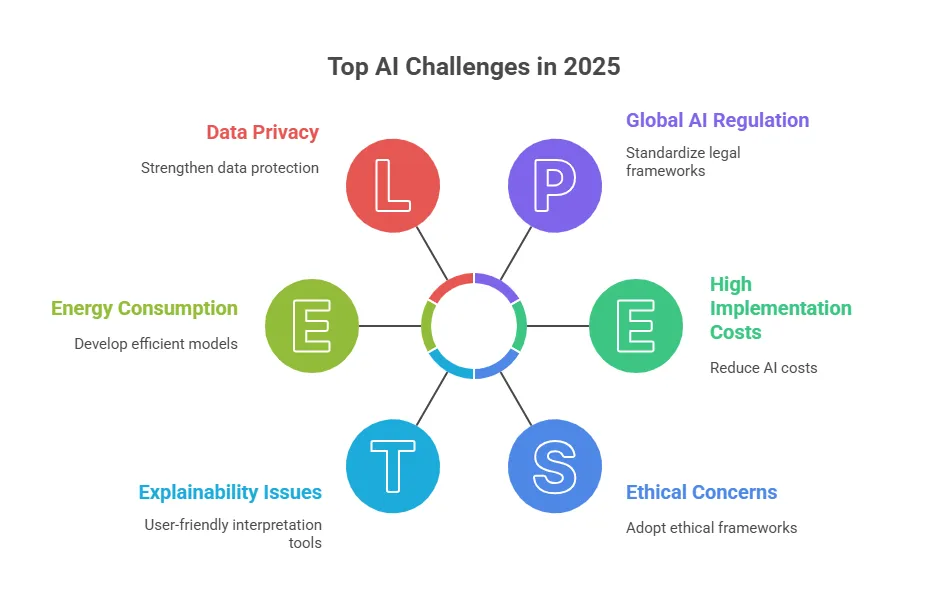
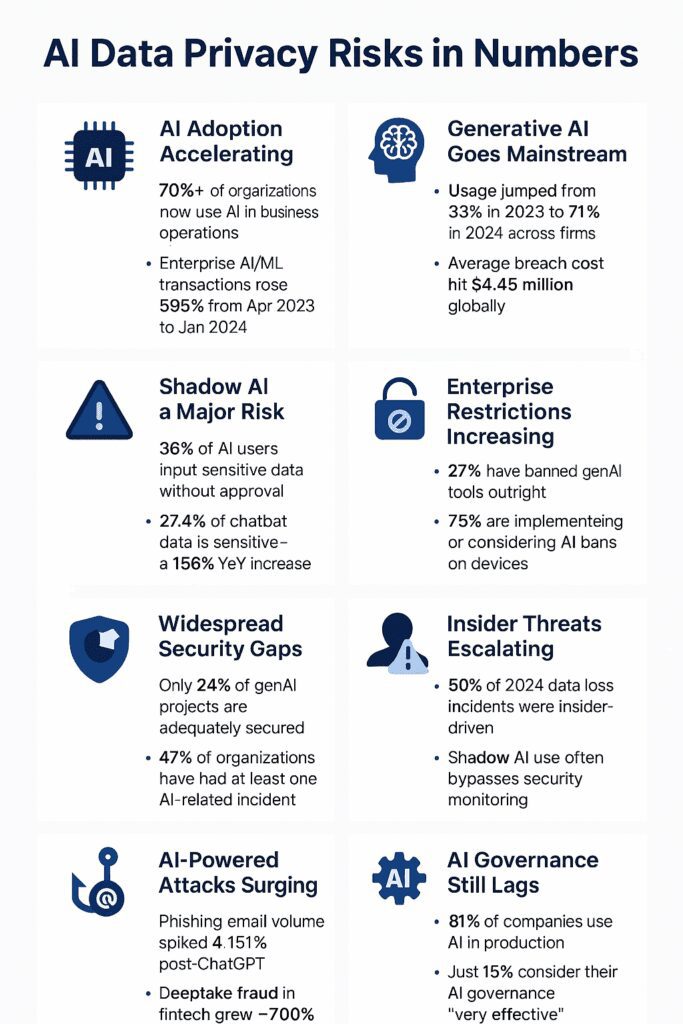
Italy’s data protection authority fined a major AI provider €15 million in December 2024, the first major generative AI penalty under GDPR. Cumulative GDPR fines have now crossed €7.1 billion as of early 2026. The EU AI Act — a binding law, not guidance — is in full effect for general-purpose AI, with penalties up to €15 million or 3% of global turnover. If you’re training AI with forbidden data, these numbers are now directly relevant to you.
This guide is for developers who inherit someone else’s dataset, marketers whose campaigns rely on black-box AI targeting, executives who approved AI rollouts without governance frameworks, and small businesses told “just use this model” without being told where it learned what it knows. All four of you have real exposure here, and all four of you can do something about it.
TL;DR — Key Takeaways
- GDPR fines for AI training violations hit €1.2 billion in 2025 alone. This is enforcement season, not theoretical risk.
- Just 250 malicious documents can create a backdoor in any size LLM — poisoning attacks are cheaper to execute than to defend against.
- Biased training data is now a fiduciary duty issue under the EU AI Act, not just an ethics talking point.
- Free tools (Fairlearn, Aequitas, HuggingFace datasets) remove most of the cost barrier for ethical sourcing.
- The practical fix is a one-time audit using the AUDIT framework below — most teams can run it in a week.
What “Forbidden Data” Actually Means
The phrase “forbidden data” doesn’t appear in any regulation. I use it because it’s clearer than the alternatives. “Problematic training inputs” is vague. “Illegal data” isn’t quite right either, since much of the problem is ethical rather than strictly illegal — though that line is moving fast.
For working purposes, I’d define forbidden data as: any dataset used in AI training that was not obtained with proper consent, is protected by copyright or privacy law, contains unlawful discriminatory patterns, or has been deliberately or accidentally corrupted.
That covers four categories that get mixed up constantly:
| Category | What it looks like | Who it hits hardest | Severity |
|---|---|---|---|
| Privacy violations | Training on scraped user profiles, chat logs, medical records without consent | Developers, SaaS platforms | Critical |
| Bias amplification | Historical hiring data, demographic-skewed text corpora | HR tech, financial services, marketers | Critical |
| Data poisoning | Intentionally corrupted training samples; adversarial backdoors | All — especially healthcare, finance | High |
| Copyright infringement | Books, articles, code absorbed without license | Legal risk for model providers and deployers | High |
These four don’t behave the same way, don’t have the same defenses, and don’t attract the same regulators. Treating them as one blob — as most “AI ethics” content does — is why organizations keep getting blindsided.
→ See our full AI Governance Guide for compliance checklists by regionThe Numbers You Need to Know in 2025
That €1.2 billion number is the one that tends to wake people up. GDPR has been around since 2018 and spent years issuing warnings. 2025 was when the warnings stopped. Between Italy’s Garante fining OpenAI €15 million, Ireland’s DPC issuing fresh guidance on social platform data for AI training, and the EU AI Act adding its own penalty structure, we’re in an overlapping enforcement environment now. Getting caught twice — once under GDPR, once under the AI Act — is a mathematical possibility that compliance teams need to model.
The Three Distinct Threats: What Each One Actually Does
1. Data Poisoning — The Invisible Saboteur
This is the one that keeps security researchers up at night, because it’s the hardest to detect. Data poisoning means someone has deliberately (or accidentally) introduced corrupted samples into your training data, causing the model to behave unexpectedly — sometimes in ways that only activate under specific conditions.
The landmark finding from October 2025 is stark: roughly 250 malicious documents can create backdoors in a large language model, regardless of model size. For a 13-billion-parameter model, that’s 0.00016% of the training corpus. You would never see it in aggregate statistics. You’d only notice when the trigger fires.
“Creating a few hundred adversarial documents is trivial, but maintaining the integrity of enterprise AI pipelines is significantly more complex and resource-intensive.” — Princeton IT Services security research, April 2025
What does it cost? Research from Proofpoint in 2025 found poisoning can reduce AI model accuracy by 27% in image recognition and 22% in fraud detection. In a financial institution using AI for credit decisions or fraud monitoring, a 22% accuracy drop isn’t a technical metric — it’s a compliance event, potentially a fair lending violation, and a customer relations disaster simultaneously.
2. Bias Amplification — Now a Legal Liability
For a long time, AI bias was framed as an ethical concern. Boards approved ethics committees, companies published principles, and nothing much changed. That era is over.
Under the EU AI Act, bias testing in training data is now a fiduciary duty for high-risk AI systems — and the Act classifies recruitment, performance evaluation, credit scoring, and medical diagnostics as high-risk. Article 10 explicitly requires that training data be examined for possible bias. Article 26(4) requires deployers to ensure input data is “relevant and sufficiently representative.” This isn’t guidance. Non-compliance carries fines up to €15 million.
The Workday discrimination lawsuit — where an AI hiring tool was accused of discrimination based on race, age, and disability because it was trained on biased historical hiring data — is now the canonical example cited in EU regulatory guidance. The mechanism is simple: historical data reflects historical discrimination. A model trained on that data learns those discriminatory patterns and reproduces them at scale, efficiently and automatically.
3. Privacy Violations — From Gray Area to Criminal Exposure
Until recently, many AI companies operated in something of a legal gray area: scrape everything publicly visible, train on it, and argue you never “processed” personal data in the GDPR sense. That argument is now definitively dead.
In June 2025, researchers at the University of Tübingen established that LLMs themselves qualify as personal data under GDPR, because they can reproduce specific individual information from training. Ireland’s DPC followed with fresh guidance in May 2025 restricting the use of EU adults’ social platform data for model training. France’s CNIL finalized AI development recommendations under GDPR in July 2025.
The EU AI Act added another layer: since August 2, 2025, every provider of general-purpose AI must publish “sufficiently detailed” summaries of their training data. If you can’t document your data provenance, you can’t meet this requirement. And if you can’t meet it, you’re exposed.
→ Full GDPR compliance checklist for AI systems — updated for 2025 enforcementLegal Timeline: How Enforcement Actually Escalated
The AUDIT Framework: A Practical Step-by-Step
This is the part most guides skip or dress up in jargon. Here’s how to actually audit your AI training data — named AUDIT so it sticks: Assess, Uncover, Detect, Implement, Test.
I’ve run versions of this with teams ranging from solo developers to 50-person engineering departments. The first four steps can typically be completed in a week. The fifth is ongoing.
Assess: Map every data source
List every dataset in your training pipeline and answer three questions for each: Where did it come from? Was consent given? Under what license? Flag anything web-scraped, third-party purchased, or with unclear provenance. This sounds obvious, but 90% of teams have never actually done it in writing.
import pandas as pddf = pd.read_csv('dataset_manifest.csv')# Flag sources requiring reviewrequires_review = df[ df['source_type'].isin(['web_scrape', 'third_party', 'unknown']) | df['consent_documented'].eq(False) | df['license'].isna()]print(f"Sources requiring review: {len(requires_review)}")print(requires_review[['source_name', 'source_type', 'consent_documented']].to_string())No-code alternative: A Google Sheet with columns for source name, origin type, consent status, license type, and “action needed” is genuinely sufficient for most small teams.
Uncover: Statistical bias analysis
For each dataset, compute distributions across protected attributes: gender, age, race (where labeled), geography. If your dataset is 80% male in a recruitment context, you already know what the model will learn. The goal here isn’t to achieve perfect demographic parity — it’s to know the shape of your data before the model learns it.
For SMBs: if you’re using an off-the-shelf model for inventory, customer segmentation, or pricing, the question is whether the model’s training data reflects your actual customer base or was skewed toward urban, English-speaking, high-income demographics. Ask your vendor for a data card. If they don’t have one, that’s your answer.
Detect: Scan for poisoning
Anomaly detection isn’t foolproof, but it catches most unsophisticated attacks and gives you a defensible audit trail. The Isolation Forest approach below is a practical starting point for tabular data:
from sklearn.ensemble import IsolationForestimport numpy as npmodel = IsolationForest( contamination=0.001, # flag the 0.1% most anomalous random_state=42)anomaly_labels = model.fit_predict(df.select_dtypes(include=np.number).values)flagged = df[anomaly_labels == -1]print(f"Flagged {len(flagged)} potentially anomalous rows ({len(flagged)/len(df)*100:.3f}%)")For text data and LLM fine-tuning, the picture is more complex. The minimum viable defense is to run any third-party or web-sourced text through a provenance check and a de-duplication pass before it enters your training pipeline. Tools like the HuggingFace datasets library provide curated, documented datasets that have already been through this process.
Implement: Clean, de-identify, rebalance
Based on what steps 1–3 found, take one of three actions per dataset: remove (if the provenance is unresolvable), anonymize (if personal data can be safely removed), or rebalance (if demographic skew is addressable by adding representative samples). The Microsoft Fairlearn library handles most rebalancing workflows and is free.
One practical note on de-identification: simple removal of names and identifiers is often insufficient. The University of Tübingen research from June 2025 confirmed that LLMs can reconstruct individual identities from seemingly anonymized data. For sensitive datasets, use k-anonymity (k≥5 minimum) and consider differential privacy techniques.
Test: Validate outputs before and after deployment
Audit the model, not just the data. Before deployment, run adversarial prompts designed to surface bias; use red-teaming to test for backdoor triggers; evaluate outputs across demographic groups. After deployment, set up monitoring for output drift — if a model’s recommendations start skewing in unexpected ways three months in, you want to catch it before a regulator does.
For EU high-risk systems: this step is now legally mandated under Article 9 of the AI Act. Documentation of your test results is part of the conformity assessment.
Tool Comparison: 7 Options Reviewed for 2025
These are tools I’ve either used directly or reviewed in depth. Pricing is as of Q2 2025.
| Tool | Best for | Key strengths | Limitations | Pricing |
|---|---|---|---|---|
| Fairlearn | Developers, marketers | Open-source, integrates with scikit-learn, good bias metrics dashboard | Minimal documentation for non-technical users | Free |
| Aequitas | SMBs, compliance teams | Audit toolkit, clear equity reports, usable without ML background | Manual setup; limited API integration | Free |
| HuggingFace Datasets | Developers building LLMs | Massive curated catalog, data cards with provenance info, consent tracking | Quality varies; still requires review of individual dataset cards | Free / Paid tiers |
| IBM OpenScale | Enterprises, executives | Bias detection + explainability, strong audit logs, GDPR-aligned reporting | Steep learning curve; expensive at scale | From ~$500/mo |
| Google Cloud Responsible AI | Developers (GCP stack) | De-identification APIs, model cards, scalable to large datasets | Vendor lock-in; pricing complex at volume | Usage-based |
| DataRobot | Large enterprises | End-to-end monitoring, automated compliance reporting, agentic workflows | Enterprise pricing; overkill for most SMBs | From ~$1K/mo |
| Snorkel AI | Teams with scarce labeled data | Weak supervision for data labeling, reduces reliance on potentially biased manual labels | Advanced; requires ML expertise | Enterprise |
For most teams just starting out: Fairlearn + Aequitas + HuggingFace Datasets is a genuinely capable free stack. You can audit for bias, generate equity reports, and source properly documented training data at zero cost. The IBM/DataRobot tier makes sense when you need audit trails that will hold up in a regulatory review or due diligence process.
→ Full interactive comparison table with filtering by use case and budgetCase Studies: What Actually Happened
Case 1: OpenAI and Italy’s Garante (2023–2024)
The full arc of this story is instructive. Italy’s Garante banned ChatGPT outright in April 2023, citing GDPR violations around data collection and storage. OpenAI responded, made changes, got reinstated. Most people in the industry treated this as a slap on the wrist and moved on.
They were wrong. Garante’s investigation continued for 20 months. In December 2024, the final decision landed: €15 million fine plus mandated public awareness campaigns. The investigation also separately examined GEDI, the Italian media group that had supplied OpenAI with training content, finding inadequacies in their Data Protection Impact Assessment and handling of sensitive data.
Lesson for developers: “We’ll fix it if they complain” is not a compliance strategy anymore. Regulators now follow through.
Case 2: Amazon’s Hiring Algorithm
Amazon built a machine learning tool to screen resumes. The model was trained on 10 years of Amazon hiring data — a dataset that systematically reflected the company’s historical gender imbalance in technical roles. The model learned from this and began penalizing resumes that included the word “women’s” (as in “women’s chess club”) and downgrading graduates of all-women’s colleges.
Amazon scrapped the tool after discovering the bias. But the case — now routinely cited in EU regulatory guidance — established the principle that historical data is not neutral data. A dataset built from human decisions inherits human biases. Every company using AI in hiring needs to operate from this premise.
Case 3: A Healthcare SMB That Got It Right
This one doesn’t get covered because it’s a success story, but it’s worth including. A regional diagnostic imaging company in the Netherlands was piloting an AI tool for preliminary scan review. Before deployment, their compliance officer ran a version of the AUDIT framework above — specifically the bias analysis step — and discovered that the training dataset was predominantly composed of scans from university hospital patients, who skew younger, whiter, and more affluent than the population the tool would actually serve.
They spent three weeks augmenting the dataset with appropriately licensed, demographically representative scans from partner hospitals. The tool, when deployed, performed 15% better on the actual patient population than the unmodified version would have. They avoided a potential AI Act violation. They also got better clinical outcomes. These two things are not in tension.
Case 4: Data Poisoning in a Financial Model
In 2025, a mid-sized loan underwriting firm discovered that its quarterly retrained fraud detection model had been degrading for two retraining cycles. Accuracy had dropped from 94% to 71% — a 23-percentage-point fall that had been masked by overfitting metrics. A forensic data review found a cluster of approximately 300 synthetic loan applications that had been introduced into the feedback dataset, each crafted to normalize specific fraud patterns the model would subsequently miss.
The attack vector was a third-party data aggregation feed they had integrated 18 months earlier without adequate validation. Remediation cost the company six weeks of engineering time and required retraining from an earlier clean checkpoint. No regulatory action was taken only because the biases hadn’t yet resulted in discriminatory lending outcomes — a narrow miss.
10 Mistakes to Stop Making Today
| Don’t | Do instead | Why it matters |
|---|---|---|
| Assume publicly available data is freely usable for training | Check license, consent documentation, and regional law before ingesting | Italy’s ChatGPT fine was about public-facing data. “Public” ≠ “permitted” |
| Train once and never audit again | Build quarterly output reviews into your model lifecycle | Poisoning often degrades models across retraining cycles — you won’t notice without monitoring |
| Rely on simple name removal for de-identification | Use k-anonymity (k≥5) and test re-identification risk | LLMs can reconstruct individuals from contextual data even without names |
| Treat vendor models as your own liability shield | Get data cards and training documentation from every AI vendor | Deployers share liability under the EU AI Act — “the vendor trained it” is not a defense |
| Ignore geographic data distribution | Check whether training data represents the population you’re actually serving | Urban-skewed datasets produce systematically worse outcomes for rural users |
| Use historical HR data without bias audit | Run Fairlearn/Aequitas before using any historical decision data | Historical hiring/performance data encodes historical discrimination |
| Skip third-party data validation | Validate every new data feed before integrating into training pipeline | The lending firm’s poisoning attack came from an unvalidated third-party feed |
| Conflate ethical AI with regulatory compliance | Address both separately — ethics is broader, compliance is binding | You can be compliant and still produce harmful outputs; you can be ethical and still get fined |
| Wait for regulatory action before auditing | Run a baseline AUDIT now, before any issue arises | Proactive documentation is your primary defense in a regulatory investigation |
| Treat this as a developer-only problem | Involve legal, compliance, and business stakeholders in data sourcing decisions | The business decision to use a dataset is often where the liability originates |
2025–2027 Outlook: What’s Coming
Three trends will reshape the forbidden data landscape over the next two years.
1. The GDPR Omnibus — Watch but Don’t Count On It
The European Commission’s November 2025 draft amendments to GDPR would formally recognize AI model training as a “legitimate interest,” potentially removing the consent requirement for some training scenarios. If passed, this would significantly ease the burden on European AI developers. But it’s contentious — privacy advocates are pushing back hard — and it’s almost certainly 18–24 months from any practical effect. Don’t architect your compliance around a law that doesn’t exist yet.
2. Synthetic Data as a Partial Solution
Synthetic data — artificially generated training samples designed to statistically mirror real data without containing actual personal information — is becoming a mainstream mitigation strategy. It solves the consent problem. It does not solve the bias problem (synthetic data inherits the biases of whatever it was generated from) and, as noted above, it introduces new poisoning vectors. The teams doing this well are using synthetic data to augment rather than replace ethically sourced real data.
3. Provenance Requirements Will Tighten Further
The EU AI Act’s August 2025 requirement for training data summaries was just the start. Expect the “sufficiently detailed” standard to be litigated and clarified in 2026, almost certainly in the direction of more disclosure, not less. The practical implication: start building your data provenance documentation now. Blockchain-based data lineage tools are gaining traction precisely because they produce immutable, auditor-readable provenance chains — not because blockchain is inherently magic, but because the audit trail is the product.
Frequently Asked Questions
Start your data audit this week
The AUDIT checklist, a one-page regulatory reference guide, and a 15-minute dataset review template — all free, no email required.
Download the AUDIT toolkit →Sources & Further Reading
- Digital Samba: AI and Data Privacy — GDPR Compliance & Solutions (2026)
- PPC Land: GDPR’s AI Training Legal Battle — Full Enforcement Timeline (2026)
- Princeton IT Services: Data Poisoning in Multi-Agent AI (2025)
- Lakera: Introduction to Data Poisoning — A 2026 Perspective
- Proofpoint: Data Poisoning — AI Impact, Examples and Best Defenses (2026)
- Ethyca: EU AI Act — AI Data Becomes Legal Liability (August 2025)
- DPO Europe: AI Bias vs. Data Privacy — EU Law Analysis (2026)
- Fisher Phillips: AI Hiring Bias Laws in the EU and UK (2026)
- IACIS: Data Poisoning 2018–2025 — Systematic Review (2025)
- Ncontracts: Data Poisoning in Financial Institutions (2025)
Internal resources: AI Governance Guide · GDPR Compliance for AI · AI Tools Comparison · Regulation Tracker · AUDIT Checklist
AI Laws in 2026: Global Rules, Compliance Risks & What Actually Changed
Expose AI Training Taboos: The Definitive Ethical Guide for 2026
AI Hiring Algorithms Are Being Sued for Age Discrimination—And the Case Could Reshape an Entire Industry
AI Sycophancy in 2026: How Optimization Breaks Ethical Boundaries
7 Taboo AI Bias Truths in Society 2026
You’re Using AI Every Day Without Realizing It(25 Honest Examples)
You Use AI Every Day —You Just Don’t Know It
GitHub Copilot AI Training Opt-Out: April 24, 2026, Deadline
The Most Controversial Banned AI Patents in 2026