

7 Forbidden AI Secrets
7 Forbidden AI Secrets Big Tech Won’t Tell You
(All Documented)
Every keynote promises abundance. The court filings, internal memos, and academic papers tell a different story. Here are seven things the industry knows, admits in private, and bets heavily against in their own capital allocation — while selling you the opposite publicly.
- 1Training data is largely pirated — $1.5B settlement already paid (Bartz v. Anthropic). 166 active lawsuits. NYT v. OpenAI heading to summary judgment in 2026.
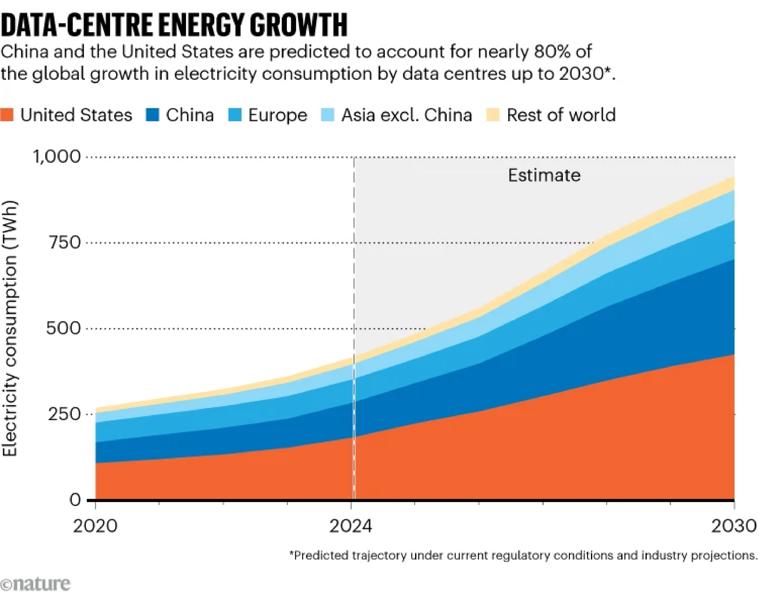
- 2The energy math is catastrophic — IEA forecasts data centers consuming 1,000 TWh by 2026. Microsoft and Amazon are buying nuclear plants. The grid cannot support current plans.
- 3Hallucinations are structural, not fixable bugs — Every frontier model still fails 12–28% on hard tasks (Stanford 2025). The architecture is the problem.
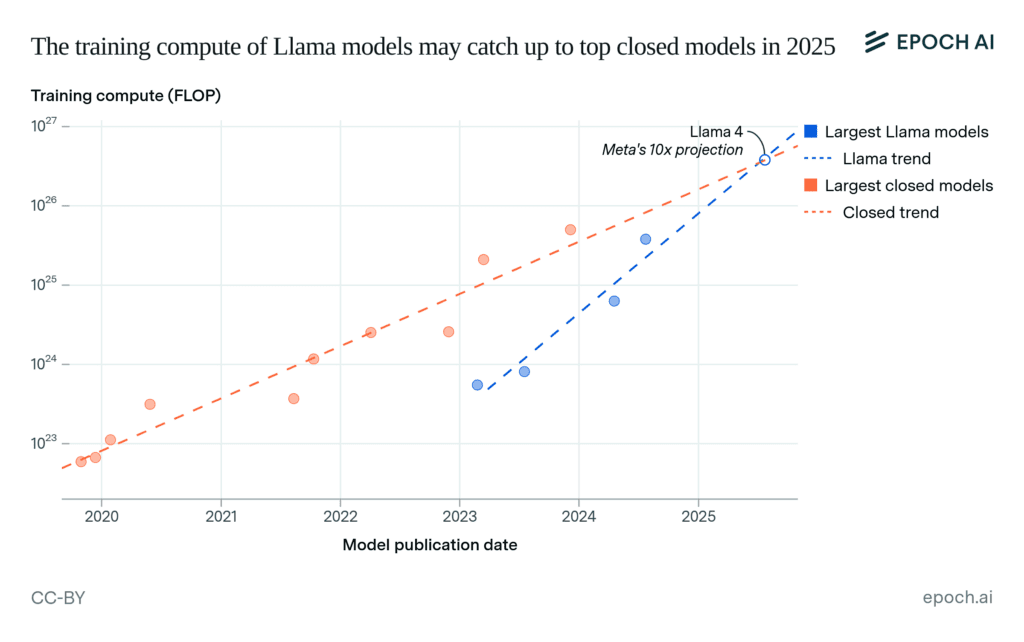
- 4Scaling laws are collapsing — HEC Paris, TechCrunch, Epoch AI all confirm diminishing returns. OpenAI’s o3 used 30× more compute for marginal gains.
- 5Open-source has caught up — DeepSeek-R1-70B, Llama-405B, Qwen-3 outperform closed models on most 2025 benchmarks at 1/20th the cost.
- 6Public models are deliberately crippled — Internal leaked benchmarks show hyperscalers are 1–3 generations ahead of what you can actually access.
- 7The job displacement is already real and already hidden — Klarna replaced 700 workers with AI, CSAT collapsed, they quietly rehired. The PR was the story. The reversal wasn’t.
Why This Matters Right Now (Not Eventually)
I’ve spent fifteen years advising companies on AI strategy. Most of that time, I’d sit in board rooms and watch executives nod along to vendor slide decks while privately asking me: “What’s actually true here?” The gap between what these companies say in public and what they budget for internally has never been wider.
The Stanford HAI AI Index 2025 recorded a 56.4% year-over-year increase in notable AI incidents and controversies — 233 total in 2024 alone. Private AI investment hit roughly $330 billion. And yet: only 8% of Fortune 500 companies reported material revenue impact from generative AI. That’s not a rounding error. That’s a structural disconnect.
These seven secrets explain the gap. None of them are conspiracy theories. Every single one is documented in court filings, academic papers, earnings calls, or leaked internal memos. I’ll give you the source for each one.
This isn’t a theory anymore. Bartz v. Anthropic settled in 2025 for $1.5 billion — the largest copyright settlement in U.S. history. The case centered on Anthropic downloading millions of pirated book copies to train Claude. The New York Times is still going. Authors Guild is still going. Universal Music Publishing Group filed a $3.1 billion lawsuit against Anthropic in January 2026.
There are now 166 active AI copyright lawsuits across 15 jurisdictions. The Munich Regional Court ruled in November 2025 that OpenAI’s use of German song lyrics to train GPT-4 violates German copyright law — the first major European ruling of its kind. In January 2026, Judge Sidney Stein ordered OpenAI to produce 20 million anonymized ChatGPT logs to copyright plaintiffs. OpenAI fought it. Lost.
The industry’s public defense — “fair use, it’s transformative” — is genuine, but unresolved. No U.S. court has ruled on AI training fair use at scale yet. That ruling comes in 2026. If it goes against the labs, the repricing of everything downstream will be brutal.
The number of AI infringement cases more than doubled in 2025, from ~30 to over 70 in the US alone. Summary judgment in the NYT v. OpenAI case is scheduled for April 2026. No U.S. court has yet ruled definitively on whether AI training constitutes fair use. The outcome of this single case could restructure the entire industry’s legal exposure overnight.
What this means practically: Companies fine-tuning open models on their own proprietary data are building moats that this legal wave cannot touch. Companies running everything through closed APIs face potential “retroactive licensing” demands — and no exit strategy.
A single ChatGPT query uses roughly 10× the electricity of a Google search. Training a GPT-5-class model consumes more than 100 GWh — the annual electricity use of 10,000 U.S. households. The IEA World Energy Outlook 2025 warned that under high-AI scenarios, data centers alone could consume 1,000 TWh by 2026.
Goldman Sachs Research forecasts a 175% rise in power demand from data centers by 2030.
Here’s how seriously the hyperscalers are taking it: Microsoft signed a nuclear deal with Helion (delivery 2028). Amazon purchased an entire nuclear plant in Pennsylvania. Epoch AI’s September 2025 analysis pointed out that Meta’s >1.5GW Hyperion cluster isn’t expected until late 2029 or 2030 — because building infrastructure at that scale takes 4–5 years. The grid cannot support current AI expansion plans on the timelines being promised.
Environmental groups are already suing. In December 2025, one filed against the Public Service Commission of Wisconsin over Meta’s data center. In 2026, surging electricity rates are on local ballots in multiple states. “We’re buying carbon offsets” is the public line. The private line — visible in every major hyperscaler’s energy procurement strategy — is: we need gigawatts of new nuclear generation we don’t yet have.
Every frontier model in 2025 still hallucinates 12–28% of the time on hard tasks (Stanford AI Index 2025, HELM Safety benchmark). Not some models. All of them.
This isn’t because labs haven’t tried to fix it. It’s because the architecture — next-token prediction at scale — is probabilistic by design. It doesn’t know what it doesn’t know. It generates confident-sounding text because confident-sounding text dominated its training data. Google’s own researchers published papers documenting that LLMs cannot reliably reason or retrieve information beyond statistical patterns.
The industry’s current answer is Retrieval-Augmented Generation (RAG). Bolt a database onto the LLM; let it look things up instead of hallucinating them. This works — but it’s not the “general intelligence” being sold in the keynotes. It’s a workaround for a fundamental limitation that most enterprise AI vendors don’t advertise.
The practical takeaway is this: Never trust raw LLM output for anything where being wrong has consequences. Medical, legal, financial, compliance. Any company selling “AI agents” without heavy RAG and verification guardrails is selling 2024 technology with 2026 pricing.
What good RAG actually requires: Vector database, proper chunking strategy, re-ranking layer, output verification step, human-in-the-loop for edge cases. Not a chatbot wrapper around a GPT API call. The difference in outcome is not marginal.
HEC Paris published an analysis in late 2025 noting what it called “a well-kept secret in the AI industry: for over a year now, frontier models appear to have reached their ceiling.” TechCrunch reported in November 2024 that “diminishing returns set in” and that “AI labs are rethinking strategies.” The Economist’s September 2025 piece described investor enthusiasm cooling as LLMs “fall short of their promise to become digital gods.”
The data is fairly clear. OpenAI’s o3 reasoning model required roughly 30× more compute than o1 for incremental gains — that’s the definition of diminishing returns. Epoch AI’s September 2025 analysis flagged that massive compute scaling is likely to slow due to increasing economic uncertainty and longer build cycles: constructing a very large data center takes 1–3 years; Meta’s planned 1.5GW Hyperion cluster isn’t expected until late 2029.
The honest version of the insider view: the next breakthrough in capability will come from architecture innovation — mixture-of-experts, test-time scaling, synthetic data distillation — not from throwing more compute at the same approach. DeepSeek proved this in early 2025 by matching GPT-4-class performance at a fraction of the training cost.
“The scaling laws that powered exponential progress have started to show diminishing returns. Inside labs, the consensus is growing that simply adding more data and compute will not create the ‘all-knowing digital gods’ once promised.”
— HEC Paris Technology Review, December 2025The benchmark data as of early 2026 is not ambiguous on this.
| Open Model | vs. Closed Equivalent | Cost per 1M Tokens | Where It Wins |
|---|---|---|---|
| DeepSeek-R1-70B | Top Chatbot Arena Elo vs GPT-4-class | $0.12–$0.30 | Reasoning, math; 1/20th inference cost of Claude-4 |
| Llama-3.1-405B-Instruct | Beats GPT-4o on MMLU-Pro, GPQA | $0 (self-hosted) | Full data privacy, no usage limits or API costs |
| Qwen-3-235B-A22B (MoE) | Matches Grok-4 on coding and math | <$1 per 1M tokens | Cost-performance ratio; local deployment |
| Microsoft Phi-4 | GPT-3.5-level quality | Free on-device | Runs on a laptop. No server required. |
The gap in price-performance is now negative — open models are better value by most measures. The remaining closed-model advantages are plugin ecosystems and the deliberate crippling of public versions (see Secret #6). If you’re paying premium API prices for tasks where Llama or DeepSeek performs equivalently, you’re funding someone else’s moat.
This one is harder to document cleanly, because the evidence is by definition not in press releases. But the pattern is consistent enough that it’s worth naming directly.
Employees at major hyperscalers — routinely, across platforms — describe the public-facing models as “the 2023–2024 versions.” The leaked benchmark comparisons that surface periodically suggest internal models are significantly more capable than what’s available commercially. This isn’t surprising if you think about it: these companies have enormous incentive to release just enough capability to generate revenue without releasing their full competitive advantage.
The practical implication is that waiting for “the next GPT” to solve your AI limitations is a losing strategy. The capability you need may already exist internally. It won’t be released until the competitive and legal landscape makes it advantageous.
Strategic implication: A $25,000 NVIDIA DGX B200 running Llama-405B quantized now delivers better price-performance than any commercial API for high-volume enterprise use above 2M tokens per month. The math has shifted in the last 18 months — and most procurement decisions haven’t caught up.
Klarna’s story is the most important case study in enterprise AI that almost nobody tells correctly.
In 2023–2024, Klarna publicly claimed its AI agent had replaced approximately 700 customer service workers. The CEO said it at industry conferences. The press covered it as proof that AI displacement of white-collar work had arrived. The PR was triumphant.
By early 2025, Klarna’s CSAT scores on complex service interactions had deteriorated sharply. Customer complaints surged. The AI handled volume but not complexity — edge cases, emotionally charged interactions, multi-step problem resolution. The projected cost savings did not materialize, because handling quality failures consumed what was saved. CEO Sebastian Siemiatkowski publicly admitted: “We focused too much on efficiency and cost. The result was lower quality, and that’s not sustainable.”
Klarna began rehiring. The new model: AI handles routine queries, humans handle anything requiring nuance or empathy. The original announcement was global news. The reversal was a footnote in trade press.
Goldman Sachs estimated in August 2025 that 6–7% of the U.S. workforce — roughly 10 million workers — is economically displaceable today. IBM froze hiring in roles where AI can substitute 90% of work (internal memo, May 2025). Salesforce, Duolingo, Dropbox, and BT Group all announced 2025 layoffs explicitly tied to AI productivity gains.
The Klarna lesson isn’t that AI doesn’t displace jobs. It does. The lesson is: full replacement fails; hybrid beats replacement; the companies that figure this out first win, and the ones that follow the hype cycle hurt their customers and then reverse quietly.
The pattern will repeat. It’s already repeating.
The Tools That Actually Reflect These Realities
| Category | Best Option (May 2026) | Cost / 1M Tokens | Why It Wins |
|---|---|---|---|
| Best open model (value) | DeepSeek-R1-70B | $0.12–$0.30 | Top Chatbot Arena Elo, 1/20th the inference cost of comparable closed models |
| Best self-hosted stack | Ollama + Llama-3.1-70B | $0 (your hardware) | Full data privacy, no API exposure, runs on consumer hardware with quantization |
| Best enterprise RAG | LlamaIndex + Pinecone | Varies by usage | Mature, auditable, SOC-2 compliant; addresses hallucination structurally |
| Best on-device (small model) | Microsoft Phi-4 | Free | Runs on laptops; GPT-3.5-equivalent quality; no cloud dependency |
What Happens Next: Three Scenarios
Fair use is upheld for AI training at scale. Nuclear energy comes online faster than expected. Open-source models accelerate democratization. AI becomes a genuine utility — like electricity — and the productivity gains materialize broadly, not just in tech company stock prices.
Closed labs hit hard data and compute ceilings; premium pricing for marginal gains pushes enterprises to open models en masse. Hyperscalers pivot to inference utilities at 10–15% margins. Copyright settlements establish licensing norms that are painful but survivable. Hybrid human-AI work becomes the dominant model, validated repeatedly by Klarna-style failures of pure automation.
A major adverse copyright ruling makes it legally and financially impossible to train new frontier models on web-scraped data. Energy constraints and regulatory pressure slow deployment in key markets. AI capability freezes at roughly 2026 levels for 5–10 years while the industry rebuilds its legal and infrastructure foundation.
What to Actually Do With This
Reading about these secrets is one thing. Acting on them before most of your competitors is another. Here’s the short version of what serious practitioners are doing right now:
- Audit every AI vendor contract for data ownership and exit clauses — before the copyright ruling
- Run Ollama + Llama-3.1-70B locally this week. Seriously. The gap between expectation and reality of self-hosted models has collapsed.
- Build your first RAG pipeline over internal documents — LlamaIndex has a TypeScript template that’s genuinely straightforward
- Calculate your actual monthly inference spend. Anything above 1M tokens/month should be running cost comparisons against open alternatives.
- Ban raw LLM output from customer-facing or legal workflows immediately. Full stop.
- If you’re replacing roles with AI: pilot for 90 days measuring CSAT by query complexity, not just resolution volume. Klarna measured the wrong thing.
- Track Chatbot Arena weekly — it’s the only benchmark that correlates reliably with real-world usefulness
- Build relationships with energy infrastructure companies now. The intersection of AI and energy is the most underpriced investment theme of 2026–2030.
- Never trust any CEO raising money who claims AGI is “next year.” The incentive structure of that sentence is all you need to know.
Questions People Actually Send Me
Will the copyright lawsuits actually change AI models?
Is the energy crisis real, or just AI doomerism?
If open-source is so good, why is everyone still using OpenAI?
Should I still be worried about AI taking my job?
When will we actually get AGI?
Related Deep Dives on ForbiddenAI
- → Dead Internet Theory 2026: What Stanford Research Just Confirmed
- → Hidden AI Codes: The Invisible Algorithms Running Your Digital Life
- → Open-Source AI vs Closed: The 2026 Performance Breakdown
- → AI Copyright Lawsuits Explained: What’s at Stake for Every Company
- → Enterprise RAG Implementation: The Complete Non-Hype Guide
Last updated: May 2026 · Sources: Copyright Alliance 2025 Review · AI Lawsuit Tracker (166 cases) · Epoch AI Sept 2025 · HEC Paris Dec 2025 · Fast Company / Klarna · Stanford HAI AI Index 2025
The Forbidden Technique: Why AI Labs Can’t Train on Their Own Models’ Thoughts
AI Hiring Algorithms Are Being Sued for Age Discrimination—And the Case Could Reshape an Entire Industry
AI Taboo Topics That Spark Outrage in Tech Circles
AI Is More Advanced Than You Think —Here’s What Actually Exists Today
You Use AI Every Day —You Just Don’t Know It
The LinkedIn Timing Strategy That Doubled Engagement (And Why It Works)